FERN PLANTS GALLERY PAGES Fern Culture with British Ferns and their Allies comprising the Ferns, Club-mosses, Pepperworts and Horsetails by Thomas Moore, F.L.S, F.H.S., Etc. London George Routledge and Sons, Broadway, Ludgate Hill. Hardcover published in 1861 provides details on British Ferns |
TYPE OF FERN TO GROW
Where to see UNITED STATES WALES |
USE OF FERN
Where to see AUSTRALIA CANADA ENGLAND FRANCE GERMANY IRELAND NETHERLANDS
|
SPORE COLOUR BED PICTURES Where to see NEW ZEALAND SCOTLAND UNITED STATES |
A Natural History of Britain's Ferns by Christopher N. Page. Published by William Collins Sons & Co. Ltd in 1988. ISBN 0 00 219382 5 (limpback edition) provides details of Coastal, Man-made Landscapes, Woodland, Wetland, Grassland and Rock Outcrops, Heath and Moorland, Lower Mountain Habitats, Upper Mountain Habitats and Atlantic Fringe Ferns. Tree Ferns by Mark F. Large & John E. Braggins. Published by Timber Press in 2004. ISBN 978-1-60469-176-4 is a scientifically accurate book dealing with Tree Fern species cultivated in the United States and the Pacific, but little known and rare tree ferns are also included. The Observer's Book of Ferns, revised by Francis Rose, previous editions compiled by W.J.Stokoe. Published by Frederick Warne & Co. Ltd in 1965 provides a comprehensive guide to 45 British species of Ferns. It provides details of habitat and how to use those ferns. The Plant Lover's Guide to Ferns by Richard Steffen & Sue Olsen. Published in 2015 by Timber Press, Inc. ISBN 978-1-60469- Success with Indoor Ferns, edited by Lesley Young. Reprinted 1998. ISBN 1 85391 554 8. It details the care of indoor ferns with their position, choice and fern care. |
Where to see UNITED STATES |
|
|
|||||||||||||||||||||||||||||||||||||||||||||||||||||||||||||||||||||||||||||||||||||||||||||||||||||||||||||||||||||||||||||||||||||||||||||||||||||||||||||||||||||||||||||||||||||||||||||||
The Wardian case was the direct forerunner of the modern terrarium and vivarium and the inspiration for the glass aquarium. It was invented by Dr. Nathaniel Bagshaw Ward (1791–1868), of London, in about 1829 after an accidental discovery inspired him. He published a book titled On the Growth of Plants in Closely Glazed Cases in 1842. Ferns suitable for Fern Stands and Wardian Cases from Fern Plant Gallery: Fern Culture Page:-
USE OF FERN as Indoor Ferns in the UK from Ferns for Home and Garden Flowers & Plants. Published by Magna Books in 1995. ISBN 1 85422 888 9. Design and text of plan, planting plan, flowering and colour scheme: Bureau Willemien Dijkshoorn BNT, Amsterdam:-
|
||||||||||||||||||||||||||||||||||||||||||||||||||||||||||||||||||||||||||||||||||||||||||||||||||||||||||||||||||||||||||||||||||||||||||||||||||||||||||||||||||||||||||||||||||||||||||||||||||||||
Species of Fern Region Comments |
Foliage Colour and |
Height x Spread in inches (cms) |
Type of Fern to Grow |
Use of Fern |
Comments |
Frond |
Credit |
Form |
||||||||||||||||||||||||||||||||||||||||||||||||||||||||||||||||||||||||||||||||||||||||||||||||||||||||||||||||||||||||||||||||||||||||||||||||||||||||||||||||||||||||||||||||||||||||||||||
Blechnum chambersii Temperate small clumps |
|
|
|
|
|
|
|
|
||||||||||||||||||||||||||||||||||||||||||||||||||||||||||||||||||||||||||||||||||||||||||||||||||||||||||||||||||||||||||||||||||||||||||||||||||||||||||||||||||||||||||||||||||||||||||||||
Blechnum chambersii Temperate small clumps |
|
|
|
|
|
|
|
|
||||||||||||||||||||||||||||||||||||||||||||||||||||||||||||||||||||||||||||||||||||||||||||||||||||||||||||||||||||||||||||||||||||||||||||||||||||||||||||||||||||||||||||||||||||||||||||||
Bolbitis heteroclita form Subtropical-Temperate spreading mossy carpet |
|
|
|
|
|
|
|
|
||||||||||||||||||||||||||||||||||||||||||||||||||||||||||||||||||||||||||||||||||||||||||||||||||||||||||||||||||||||||||||||||||||||||||||||||||||||||||||||||||||||||||||||||||||||||||||||
Callistopteris bauerana Subtropical-Temperate finely divided fronds |
|
|
|
|
|
|
|
|
||||||||||||||||||||||||||||||||||||||||||||||||||||||||||||||||||||||||||||||||||||||||||||||||||||||||||||||||||||||||||||||||||||||||||||||||||||||||||||||||||||||||||||||||||||||||||||||
Cardiomanes reniforme Temperate- Subtropical appealing fronds |
|
|
|
|
|
|
|
|
||||||||||||||||||||||||||||||||||||||||||||||||||||||||||||||||||||||||||||||||||||||||||||||||||||||||||||||||||||||||||||||||||||||||||||||||||||||||||||||||||||||||||||||||||||||||||||||
Cheilanthes argentea Eastern Asia, Northern India, Japan, China, Siberia USDA Zone 5a From the Greek cheilos (lip) and anthos (flower)
Needs dry atmosphere. |
Grow in a terrarium set up with a stony potting mix and kept on the dry side (by sparse watering and leaving the lid off for long periods), Cheilanthes can sometimes be grown to perfection. They may need brighter light than other ferns usually grown in terrariums. Loves a site where the roots can stay cool and moist down among rocks. Fronds curl when stressed by drought, but unfurl when moisture returns. |
4-8 x 4-6 Deer resistant. |
Cloak, Lip, Hand Ferns and Their Hardy Relatives (Bommeria, Cheilanthes, Doryopteris, Gymnopteris, Hemionitis, Notholaena, Paraceterach, Pellae, Pleurosorus, Quercifilix)
Propagation: By spores sown on fine sandy peat, kept moist and shaded under bell-glass. It needs sharp drainage and lime to do well, winter wet would be the biggest danger for this fern. |
Suitable for Rock Garden and Wall Fern. Stove and Greenhouse Ferns. First introduced late eighteenth century. |
Herbaceous fern in Full Sun but prefers Part Shade. A decorative dwarf fern with attractively-shaped fronds which are dark green on the surface and silvery on the underside from a covering of waxy powder. It is an easily grown species that requires plenty of light, looks attractive among rocks. It is a cute little deer-resistant dryland fern that's a great choice for the rock garden, but good drainage is essential for success. Excellent in walls and rockeries, the favoured locations for these ferns. |
|
|
|
||||||||||||||||||||||||||||||||||||||||||||||||||||||||||||||||||||||||||||||||||||||||||||||||||||||||||||||||||||||||||||||||||||||||||||||||||||||||||||||||||||||||||||||||||||||||||||||
Cheilanthes austrotenuifolia * (Cheilanthes tenuifolia) Australia, New Zealand The Seeds of South Australia database contains 143 families, 837 genera and 3,103 native species with 29,293 images (also with 400 introduced species). Tropical-Subtropical Spreading, adaptable |
Grow in a terrarium set up with a stony potting mix and kept on the dry side (by sparse watering and leaving the lid off for long periods), Cheilanthes can sometimes be grown to perfection. They may need brighter light than other ferns usually grown in terrariums. Bright green fronds grow from an underground rhizome. Fronds die down in summer and return with the rain in Autumn. Spore cases partially enclosed by scalloped margins of lobes. |
4-20 x Fronds crowded, mostly 15–30 cm high, 3–10 cm wide at the widest point; stipe red-brown, dark brown or black, covered densely at the base with transparent scales; lamina lanceolate to triangular, 2–3-pinnate, glabrous above, sparsely scaly below; ultimate segments sessile, 2–6 mm long and 1–3 mm wide, with crenate margins. |
Cloak, Lip, Hand Ferns and Their Hardy Relatives (Bommeria, Cheilanthes, Doryopteris, Gymnopteris, Hemionitis, Notholaena, Paraceterach, Pellae, Pleurosorus, Quercifilix)
Propagation: By spores sown on fine sandy peat, kept moist and shaded under bell-glass. |
Suitable for Conservatory and Heated Greenhouse. Stove and Greenhouse Ferns. First introduced late eighteenth century. |
This is a dwarf fern which develops into compact clumps of bright green, finely divided fronds. It usually occurs in rocky situations and plants look particularly appealing in a rock garden, especially when situated against dark rocks. Plants require well-drained, acid, humus-rich soils in a sunny situation. Once a common understory plant along streams in moist areas of Southern Australia. Grows in rocky ground in open forest or on exposed rocky slopes in New South Wales. Garden Use in Victoria, Australia:While difficult to establish it is very tough for rockeries and exposed positions provided it has root protection. |
Cheilanthes austrotenuifolia H.M.Quirk & T.C.Chambers, Black Mountain, Canberra, ACT, 4 November 2010. By Donald Hobern from Copenhagen, Denmark via Wikimedia Commons. See more photos from Seeds of South Australia. |
||||||||||||||||||||||||||||||||||||||||||||||||||||||||||||||||||||||||||||||||||||||||||||||||||||||||||||||||||||||||||||||||||||||||||||||||||||||||||||||||||||||||||||||||||||||||||||||||
Cheilanthes californica (Hypolepis californica, Adiantopsis californica) California, Mexico Needs dry atmosphere. |
Grow in a terrarium set up with a stony potting mix and kept on the dry side (by sparse watering and leaving the lid off for long periods), Cheilanthes can sometimes be grown to perfection. They may need brighter light than other ferns usually grown in terrariums. It has lacy fronds of an attractive fresh green. Aspidotis californica has leaves that are thin and dissected into many triangular leaflets which are subdivided into small segments with curled teeth. |
2-6 x 2-4 |
Cloak, Lip, Hand Ferns and Their Hardy Relatives (Bommeria, Cheilanthes, Doryopteris, Gymnopteris, Hemionitis, Notholaena, Paraceterach, Pellae, Pleurosorus, Quercifilix)
Propagation: By spores sown on fine sandy peat, kept moist and shaded under bell-glass. |
Suitable for Rock Garden and Wall Fern. Stove and Greenhouse Ferns. First introduced late eighteenth century. |
Greenhouse Fern. It occurs naturally on shaded, rock sites. In cultivation, it has proved tricky to maintain requiring a very porous, acid mixture, bright light but not sun, and ample air movement. Plants are susceptible to overwatering. It grows in rock cracks and crevices in many types of habitat, including Chaparral, Yellow pine forest, Foothill oak woodland, and Valley grassland in California, USA. |
|
See Botanical Figure. |
|
||||||||||||||||||||||||||||||||||||||||||||||||||||||||||||||||||||||||||||||||||||||||||||||||||||||||||||||||||||||||||||||||||||||||||||||||||||||||||||||||||||||||||||||||||||||||||||||
Cheilanthes argentea Temperate needs dry atmosphere |
|
|
|
|
|
|
|
|
||||||||||||||||||||||||||||||||||||||||||||||||||||||||||||||||||||||||||||||||||||||||||||||||||||||||||||||||||||||||||||||||||||||||||||||||||||||||||||||||||||||||||||||||||||||||||||||
Cheilanthes argentea Temperate- Subtropical spreading, adaptable |
|
|
|
|
|
|
|
|
||||||||||||||||||||||||||||||||||||||||||||||||||||||||||||||||||||||||||||||||||||||||||||||||||||||||||||||||||||||||||||||||||||||||||||||||||||||||||||||||||||||||||||||||||||||||||||||
Cheilanthes sieberi * Australia, New Zealand, New Caledonia |
Grow in a terrarium set up with a stony potting mix and kept on the dry side (by sparse watering and leaving the lid off for long periods), Cheilanthes can sometimes be grown to perfection. They may need brighter light than other ferns usually grown in terrariums. Makes a good groundcover or rockery plant in Australia - Paten Park Native Nursery is a not-for-profit, community organisation specialising in the indigenous plant species of south-east Queensland. |
4-20 x |
Cloak, Lip, Hand Ferns and Their Hardy Relatives (Bommeria, Cheilanthes, Doryopteris, Gymnopteris, Hemionitis, Notholaena, Paraceterach, Pellae, Pleurosorus, Quercifilix)
Propagation: By spores sown on fine sandy peat, kept moist and shaded under bell-glass. |
Suitable for Rock Garden and Wall Fern. Stove and Greenhouse Ferns. First introduced late eighteenth century. |
It is a decorative species when planted among rocks in a sunny situation, in acid humus-rich loam. This fern may grow up to 25 cm tall within Australia and New Zealand. It is a widespread plant, seen in a variety of different habitats: it occurs in arid areas as well as sites with over 1500 mm of annual average rainfall. In desert areas it grows in shaded rocky gullies. However, near the coast, it can grow in full sun in cracks of rocks, or in thin soils. Grows amongst rocks, widespread in open forest or woodland in New South Wales, Australia. Sandy to clayey loams, gravel, laterite, granite. Rock crevices, slopes, outcrops, near waterfalls or streams, floodplains. |
Cheilanthes sieberi habit. Date 25 August 2011. By Mark Marathon via Wkimedia Commons. See other photos. |
||||||||||||||||||||||||||||||||||||||||||||||||||||||||||||||||||||||||||||||||||||||||||||||||||||||||||||||||||||||||||||||||||||||||||||||||||||||||||||||||||||||||||||||||||||||||||||||||
Cystopteris bulbifera Temperate may naturalize |
|
|
|
|
|
|
|
|
||||||||||||||||||||||||||||||||||||||||||||||||||||||||||||||||||||||||||||||||||||||||||||||||||||||||||||||||||||||||||||||||||||||||||||||||||||||||||||||||||||||||||||||||||||||||||||||
Cystopteris bulbifera Temperate delicate fronds |
|
|
|
|
|
|
|
|
||||||||||||||||||||||||||||||||||||||||||||||||||||||||||||||||||||||||||||||||||||||||||||||||||||||||||||||||||||||||||||||||||||||||||||||||||||||||||||||||||||||||||||||||||||||||||||||
Diplazium subsinuatum Subtropical-Temperate excellent, distinctive fronds |
|
|
|
|
|
|
|
|
||||||||||||||||||||||||||||||||||||||||||||||||||||||||||||||||||||||||||||||||||||||||||||||||||||||||||||||||||||||||||||||||||||||||||||||||||||||||||||||||||||||||||||||||||||||||||||||
Diplazium subsinuatum Subtropical-Temperate clumping |
|
|
|
|
|
|
|
|
||||||||||||||||||||||||||||||||||||||||||||||||||||||||||||||||||||||||||||||||||||||||||||||||||||||||||||||||||||||||||||||||||||||||||||||||||||||||||||||||||||||||||||||||||||||||||||||
Doodia caudata Temperate-Subtropical small clumps |
|
|
|
|
|
|
|
|
||||||||||||||||||||||||||||||||||||||||||||||||||||||||||||||||||||||||||||||||||||||||||||||||||||||||||||||||||||||||||||||||||||||||||||||||||||||||||||||||||||||||||||||||||||||||||||||
Doryopteris concolor (Cheilanthes concolor, Doryopteris kirkii, Pellaea geraniifolia, Pteris concolor) Central and South America, West Indies, Africa, Asia, Polynesia, Australia concolor: coloured similarly; alluding to the almost uniform shade of green of both surfaces of the frond. Its common name is the Hand Fern due to having fronds (large divided leaves) shaped like hands (Arab Times, 2011) and also the Oak Leaf Fern (Lockyer Valley Regional Council, n.d.) in Western Australia. Likes drier atmosphere. |
Rhizome erect to procumbent, up to 3 mm in diameter; rhizome scales dark-brown, linear, up to 3 mm in length, margins pale, entire. Fronds tufted, sometimes weakly dimorphic.
Doryopteris concolor is nowadays generally placed in the genus called Chelianthes (Spencer, 1995). According to Cook Islands Biodiversity Database (n.d.), Doryopteris concolor is commonly called the Cheilanthes fern in Cook Island (Cook Islands Biodiversity Database, n.d.). Sori continuous along the margins of the lobules, brownish. |
4-12 x
Doryopteris concolor is known as a resurrection fern. This is because its fronds curl inwards when they dry out. It is able to survive long periods of dry weather. The fern can completely dry out (known as desiccation) and when it becomes wet again the fronds resume their normal function in just a few hours (Bostock, n.d.). Doryopteris concolor has been recorded fertile from May to August (Smith, 1992). It has up to 12 fronds per plant, 64 spores per sporangium (Roux, 2003) and a root system which sets it in the ground. It has no dormant period and is known as epilithic, meaning it grows on the surface of rocks (Roux, 2003). |
Cloak, Lip, Hand Ferns and Their Hardy Relatives (Bommeria, Cheilanthes, Doryopteris, Gymnopteris, Hemionitis, Notholaena, Paraceterach, Pellae, Pleurosorus, Quercifilix)
Propagation: |
Suitable for Acid Soil. Bright to semi- shady, no sunlight. The same indoor temperature all year round. Not below 16° C (61° F) during the winter. Keep evenly moist. In winter water less when temperatures are low. Sensitive to water-logging. Give low doses of fertilizer every four weeks from early spring to early autumn. Make sure ventilation is good. Repot in spring if necessary. |
A fern with dark green, hand-shaped fronds. Forms a pleasant little clump and blends well with rocks. Needs wam, dry, airy conditions in well-drained, acid to neutral soil. A small fern with erect rhizomes. Habitat in Rock crevices, base of boulders, shaded earth banks in ravines in miombo woodland in Zimbabwe It grows in montane areas (mountains or areas of high elevation). Landforms in which Doryopteris concolor inhabits includes in ravines, on earth mounds and at the base of boulders (Flora of Zambia, n.d.). It is a fern that establishes itself in deeply shaded leaf litter and on rocks in seasonally moist evergreen forests. It is an epilithic fern and lithophytic fern meaning it grows on rocks, frequently on limestone. Sometimes it is found in sheltered damp areas of woodland or open forest but most commonly in rainforests. It thrives in moist soils (University of Connecticut, 2013), especially brown to red loam, and grows best in high humidity. |
Doryopteris concolor - Young fronds of an Oak-leaf fern in Krantzkloof Nature Reserve, KwaZulu-Natal. Date: 4 June 2013. By JMK via Wikimedia Commons. |
||||||||||||||||||||||||||||||||||||||||||||||||||||||||||||||||||||||||||||||||||||||||||||||||||||||||||||||||||||||||||||||||||||||||||||||||||||||||||||||||||||||||||||||||||||||||||||||||
Doryopteris ludens (Dryopteris wallichii) Peninsular Malaysia with northern India to southern China. The Tropical Fern & Exotic Plant Society is based in South Florida. Dry, needs lime. |
It has dimorphic leaves; the leaves change shape. It has a creeping rhizome and spaced fronds, the fertile ones of which are taller and more deeply lobed. Fronds are dark green and leathery and are carried on wiry black stems. Able to tolerate short spells of dryness at the root zone if there is high humidity; planting media/ soil should be moist, but not soggy or wet continually as this can cause the plant to rot. |
12 x
Welcome to hortipedia, the plant database that lets you search and find plants by life-form, bloom color, bloom time, size, and many more.. Currently our database holds entries about 32149 plants. |
Cloak, Lip, Hand Ferns and Their Hardy Relatives (Bommeria, Cheilanthes, Doryopteris, Gymnopteris, Hemionitis, Notholaena, Paraceterach, Pellae, Pleurosorus, Quercifilix)
Propagation: |
Suitable for Containers or Hanging Baskets in Conservatory or Heated Greenhouse in the UK. Bright to semi- shady, no sunlight. The same indoor temperature all year round. Not below 16° C (61° F) during the winter. Keep evenly moist. In winter water less when temperatures are low. Sensitive to water-logging. Give low doses of fertilizer every four weeks from early spring to early autumn. Make sure ventilation is good. Repot in spring if necessary. Best to keep above 50 degrees F (10 degrees C). |
This small fern is suitable for containers or hanging baskets in shade. A small-medium fern with slender, long-creeping rhizomes. Grows well under medium light in moist potting mix. Plants like warm, dry, airy conditions and a well-drained, alkaline soil mix. Grows on limestone. The perennials prefer a half-shady situation on moderately moist soil. The substrate should be gritty loam. They tolerate temperatures only above at least 1°C (USDA zone 10). Grows on Limestone rocks by streams in forests; 400-1000 m. |
|
Doryopteris ludens - Botanical specimen in Saigon Zoo and Botanical Gardens - Ho Chi Minh City, Vietnam. By Daderot via Wikimedia Commons.
Doryopteris ludens - Botanical specimen in the Marie Selby Botanical Gardens - Sarasota, Florida, USA. Date: 20 March 2017. By Daderot via Wikimedia Commons. See more photos. |
|
||||||||||||||||||||||||||||||||||||||||||||||||||||||||||||||||||||||||||||||||||||||||||||||||||||||||||||||||||||||||||||||||||||||||||||||||||||||||||||||||||||||||||||||||||||||||||||||
Doryopteris concolor Tropical-Subtropical dry, needs lime, difficult |
|
|
|
|
|
|
|
|
||||||||||||||||||||||||||||||||||||||||||||||||||||||||||||||||||||||||||||||||||||||||||||||||||||||||||||||||||||||||||||||||||||||||||||||||||||||||||||||||||||||||||||||||||||||||||||||
Gymnopteris marantae (Cheilanthes marantae, Paraceterach marantae, Acrostichum marantae, Para-gymnopteris marantae) European golden-haired bare fern Africa, Southern Europe, Syria, Northern India, Canary Islands. Dry, difficult. |
The undersides of the fronds are covered in rusty red scales, which add to its ornamental appeal. The lateral veins are bifurcated, and the sporangia group is placed along the upper part of the small veins, covering the scales, without a cover. |
4-10 x |
Cloak, Lip, Hand Ferns and Their Hardy Relatives (Bommeria, Cheilanthes, Doryopteris, Gymnopteris, Hemionitis, Notholaena, Paraceterach, Pellae, Pleurosorus, Quercifilix)
Propagation: |
Suitable for Terrarium or Conservatory or Heated Greenhouse for Temperate regions; Keep the terrarium on the dry side or even left open. |
A very drought-tolerant little fern. Best grown in a rock pocket exposed to partial or filtered sun. Likes air movement and must not be overwatered. In temperate regions it should be kept as dry as possible over winter. It grows in the dry stone seams under the forest, at an altitude of 1800-4200 meters. |
|
See photos. Welcome to the garden plant network! The Garden Plant Network is the website of Landscape Network. The goal is to collect common garden plants in southern China and northern China. Centering on the garden plant library and plant illustration library, there are 4,900 garden plants, 90,517 plant illustrations, 17,404 plant encyclopedias, and 56,390 plant pictures. |
|
||||||||||||||||||||||||||||||||||||||||||||||||||||||||||||||||||||||||||||||||||||||||||||||||||||||||||||||||||||||||||||||||||||||||||||||||||||||||||||||||||||||||||||||||||||||||||||||
Hemionitis cordata (Hemionitis arifolia, Hemionitis cordifolia, Asplenium arifolium, Gymnogramma arifolia, Parahemionitis cordata) Heart Fern, Heart Leaf Fern. India, Sri Lanka, Thailand, Malaysia, Phillipines. Zones 10-12 (between 8C to 40C). Hemionitis is a group of small tropical ferns, with copiously netted veins and naked lines of sporangia following the veins. 8 or 9 species occur in the tropics of both hemispheres. The plants are dwarf, and are grown in Wardian cases by a few fanciers in the Old World. Subtropical-Temperate dry, needs lime |
It has dimorphic fronds: the sterile blades are heart-shaped; the fertile, triangular-hastate. Both fronds have hais on the stipes and thinly on the blades, and the veins are netted with polygonal, elongate areoles. |
6-12 x 12-18 For a potted crop: During the spring-summer growing season, water regularly with non-calcareous water at room temperature and, if necceccary, apply a small amount of fertilizer, always on moist soil; it will take a good month after its acquisition when the Hemionite will seem to have acclimated, select a fertilizer for green plants highly diluted, do not forget that in a natural environment, it is often a myrmecophilous plant. Recommend watering by immersion of the root ball during about 30 minutes, then take care not to let water stagnate in the pot cache. In the winter, reduce the watering and maintain it ptreferably at a temperature between 10-14C. Repotting, if necessary, will be done in the spring in a slightly enriched substrate. |
Cloak, Lip, Hand Ferns and Their Hardy Relatives (Bommeria, Cheilanthes, Doryopteris, Gymnopteris, Hemionitis, Notholaena, Paraceterach, Pellae, Pleurosorus, Quercifilix)
Propagation: Division in the spring. |
Suitable for Terrarium or Wardian Case.
Warm Greenhouse Evergreen Ferns. Fronds heart-shaped or hand-shaped. First introduced late eighteenth century. |
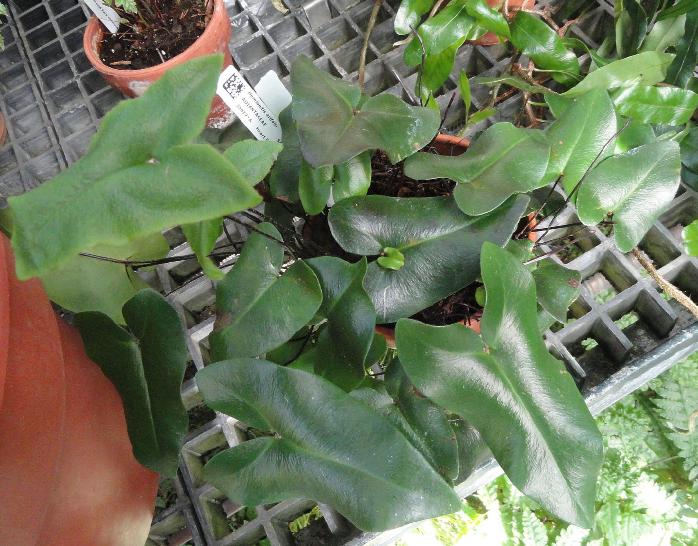
Warm Greenhouse Fern. A neat little fern which is very sensitive to over-potting and is best maintained in a small pot for as long as possible. Plants prefer an open, humus-rich neutral to alkaline soil mix, warm conditions and strong light. Small plantlets arise on the main veins of the leaf near the base. The terrarium is ideal for its constant temperature and hygrometry. Its origin was in the rainforests of Southeast Asia present in Laos, Vietnam, Ceylon and Taiwan. Wet soil and rock crevices of stream valleys in dense forests, shrublands, slopes; below 1000 m.. Use in Terrarium; reptile and amphibian safe. |
Hemionitis arifolia - Botanical specimen in the Lyman Plant House, Smith College, Northampton, Massachusetts, USA. Date 20 December 2012. By Daderot via Wikimedia Commons. See images of this fern from Ferns of Thailand, Laos and Cambodia - On muddy rocks or terrestrial by paths in dense forests at low to medium altitudes below 600 m throughout the country but rather rare. Use as houseplant, in Terrarium or in Bog Garden. Needs excellent drainage in pots. See photos. Excellent ground cover in terrarium - Siam Greenculture ship throughout world. |
||||||||||||||||||||||||||||||||||||||||||||||||||||||||||||||||||||||||||||||||||||||||||||||||||||||||||||||||||||||||||||||||||||||||||||||||||||||||||||||||||||||||||||||||||||||||||||||||
Hemionitis palmata West Indies, Central and South America with Distribution Map Hemionitis is a group of small tropical ferns, with copiously netted veins and naked lines of sporangia following the veins. 8 or 9 species occur in the tropics of both hemispheres. The plants are dwarf, and are grown in Wardian cases by a few fanciers in the Old World. Subtropical-Temperate Dry |
Leaf-blades borne on tall stalks, palmate, 2-6 inches (5-15 cms) wide, with 5 nearly equal triangular divisions, those of the sterile leaves less acute; surfaces pubescent. Reproduces by numerous buds as well as by spores. Spores elongate on the netted veins as shown by images in Ferns and Lycophytes of the World |
8 x
Hemionitis grows in open, or sometimes dense, forests, on shrubby hillsides, and in open rocky areas. It is often on stream banks, on road banks, or on old rock walls, very rarely on rotting logs. Hemionitis palmata may be weedy, sometimes invading coffee or bannana plantations. Colonies of Hemionitis palmata are often formed by vegetative reproduction. Buds in the major sinuses of the lamina develop when the leaf ages and lies on the soil. Hemionitis usually grows between 100 and 1000 m, sometimes lower to nearly sea level, and in the Andes higher to 2800 m. |
Cloak, Lip, Hand Ferns and Their Hardy Relatives (Bommeria, Cheilanthes, Doryopteris, Gymnopteris, Hemionitis, Notholaena, Paraceterach, Pellae, Pleurosorus, Quercifilix)
Propagation: Division in the spring. |
Suitable for Wardian Case or Terrarium. Warm Greenhouse Evergreen Ferns. Fronds heart-shaped or hand-shaped. First introduced late eighteenth century. |
Warm Greenhouse Fern. An attractive little fern with leaves of a similar shape to those of a strawberry. The sterile fronds have short stalks and are clustered below the much taller fertile fronds. Small plantlets arise on the main veins of the leaf near the base. Plants are popular in cultivation and like warm, airy conditions in a small pot. Grows well under medium light in moist potting mix. Usually 1 bud develops in a large marginal notch on the blade. Grow in shade. Plants of Saint Lucia - Indigenous rare terrestrial on dry forested rocky hills. |
Hemionitis palmata specimen in the Botanischer Garten München-Nymphenburg, Munich, Germany. Date: 2 May 2011. By Daderot via Wikimedia Commons |
||||||||||||||||||||||||||||||||||||||||||||||||||||||||||||||||||||||||||||||||||||||||||||||||||||||||||||||||||||||||||||||||||||||||||||||||||||||||||||||||||||||||||||||||||||||||||||||||
Hymenophyllum species (plural) Tropical-Temperate needs high humidity |
|
|
|
|
|
|
|
|
||||||||||||||||||||||||||||||||||||||||||||||||||||||||||||||||||||||||||||||||||||||||||||||||||||||||||||||||||||||||||||||||||||||||||||||||||||||||||||||||||||||||||||||||||||||||||||||
Lemmaphyllum accedens Tropical-Temperate creeping habit |
|
|
|
|
|
|
|
|
||||||||||||||||||||||||||||||||||||||||||||||||||||||||||||||||||||||||||||||||||||||||||||||||||||||||||||||||||||||||||||||||||||||||||||||||||||||||||||||||||||||||||||||||||||||||||||||
Lemmaphyllum accedens Tropical-Subtropical creeping habit |
|
|
|
|
|
|
|
|
||||||||||||||||||||||||||||||||||||||||||||||||||||||||||||||||||||||||||||||||||||||||||||||||||||||||||||||||||||||||||||||||||||||||||||||||||||||||||||||||||||||||||||||||||||||||||||||
Leptopteris fraseri* Subtropical-Temperate needs high humidity |
|
|
|
|
|
|
|
|
||||||||||||||||||||||||||||||||||||||||||||||||||||||||||||||||||||||||||||||||||||||||||||||||||||||||||||||||||||||||||||||||||||||||||||||||||||||||||||||||||||||||||||||||||||||||||||||
Leptopteris fraseri Temperate-Subtropical needs high humidity |
|
|
|
|
|
|
|
|
||||||||||||||||||||||||||||||||||||||||||||||||||||||||||||||||||||||||||||||||||||||||||||||||||||||||||||||||||||||||||||||||||||||||||||||||||||||||||||||||||||||||||||||||||||||||||||||
Leptopteris fraseri Temperate-Subtropical needs high humidity |
|
|
|
|
|
|
|
|
||||||||||||||||||||||||||||||||||||||||||||||||||||||||||||||||||||||||||||||||||||||||||||||||||||||||||||||||||||||||||||||||||||||||||||||||||||||||||||||||||||||||||||||||||||||||||||||
Macroglena caudata Tropical-Temperate excellent, needs coarse mix |
|
|
|
|
|
|
|
|
||||||||||||||||||||||||||||||||||||||||||||||||||||||||||||||||||||||||||||||||||||||||||||||||||||||||||||||||||||||||||||||||||||||||||||||||||||||||||||||||||||||||||||||||||||||||||||||
Nephrolepis exaltata Tropical-Temperate small, ruffled clumps |
|
|
|
|
|
|
|
|
||||||||||||||||||||||||||||||||||||||||||||||||||||||||||||||||||||||||||||||||||||||||||||||||||||||||||||||||||||||||||||||||||||||||||||||||||||||||||||||||||||||||||||||||||||||||||||||
Notholaena standleyi (Cheilanthes standleyi, Cheilanthes hookeri ; Notholaena candida var. quinque-fidopalmata ; Notholaena hookeri ; Notholaena sulphurea var. quinqu-ifidopalmata ; Chrysochosma hookeri) Native to the southwestern United States and Mexico. The genus name comes from the Greek nothos, false, and chlaena, cloak, referring to the blade margins, which are not reflexed as in the similar genus Cheilanthes. Dry, may need lime. |
It has pentagonal blades densely covered with a whitish powder on the lower surface, and the hardly enrolled indusium is narrow. An attractive fern with broad, dull green fronds with the undersurface covered with yellow or white waxy powder. In dry periods the fronds curl inwards to form a ball. Plants are clumping and look attractive among rocks. They need bright light, well-drained gravelly soils of a neutral to alkaline pH and plenty of air movement. It is locally common in rock cracks and sheltered pockets under boulders in dry exposed sites. |
4-12 x |
Cloak, Lip, Hand Ferns and Their Hardy Relatives (Bommeria, Cheilanthes, Doryopteris, Gymnopteris, Hemionitis, Notholaena, Paraceterach, Pellae, Pleurosorus, Quercifilix)
Propagation: By spores sown on surface of fine sandy peat in pans under bell-glass in temperature 75-85F (24-29C) at any time; division at potting time. It takes 13 days to germinate and sporulates from late spring to fall. The spore is transported by air and water. |
Suitable for Terrarium in Conservatory in temperate regions. |
Herbaceous Stove Fern. A small fern with compact rhizomes and fronds in a cluster. Requires high light in moist-dry, well-drained garden soil preferably mixed with coarse sand or gravel. Notholaena standleyi is a perennial species that typically grows in desert regions at elevations from 300 to 2100 m. It is found on rocky hillsides, usually in the crevices created by limestone and granite boulders that provide the partial shade the plant prefers. During periods of drought, the frond may curl and become brown until water is available, an adaptation to the semi-arid environments it inhabits. At lower elevations, it sometimes grows alongside Notholaena californica. |
Stove and Greenhouse Ferns. Fronds divided, upper surface green, under covered with white powder or scales. Height from 3 to 18 inches (7.5-45cm). First introduced mid-eighteenth century. |
Notholaena standleyi — Standley Cloak Fern. Substrate is highly weathered gneiss; At the Phoenix Mountains Preserve, Maricopa County, Arizona. Notholaena standleyi distribution in US. Date: 10 April 2012. By USDA via Wikimedia Commons. See photos. See Notholaena standleyi in the desert house at the Royal Botanic Gardens Edinburgh See dry foliage balls and green fronds from Eco Landscaping. |
Xerophytes should be planted with their crowns slightly above the soil. If using pots, make sure that the soil level is close to the rim in order to reduce the amount of water that could be caught in the pot during watering. A process known as double potting maintains uniform soil moisture over a longer time. The fern is planted in a porous clay pot, which in turn is planted in a larger clay pot, usually 5-7.5 cms (2-3 inches) wider than the first. The same soil mix is used in both pots. |
||||||||||||||||||||||||||||||||||||||||||||||||||||||||||||||||||||||||||||||||||||||||||||||||||||||||||||||||||||||||||||||||||||||||||||||||||||||||||||||||||||||||||||||||||||||||||||||
|
|
|
|
|
|
|
|
|
||||||||||||||||||||||||||||||||||||||||||||||||||||||||||||||||||||||||||||||||||||||||||||||||||||||||||||||||||||||||||||||||||||||||||||||||||||||||||||||||||||||||||||||||||||||||||||||
|
If you grow and sell ferns in any country, please tell me so that I can put them on this website and inform others where they can be bought online via mail-order. If you would provide photos and fern details to be only used by me on this website, they would be gratefully received, since I could assume that the photo was a valid one in regard to its name of fern in its filename to that fern in the photo. |
Site design and content copyright ©January 2009. DISCLAIMER: Links to external sites are provided as a courtesy to visitors. Ivydene Horticultural Services are not responsible for the content and/or quality of external web sites linked from this site. |
Fern Grower's Manual by Barbara Joe Hoshizaki & Robbin C. Moran. Revised and Expanded Edition. Published in 2001 by Timber Press, Inc. Reprinted 2002, 2006. ISBN-13:978-0-88192-495-4. |
|
|
|||||||||||||||||||||||||||||||||||||||||||||||||||||||||||||||||||||||||||||||||||||||||||||||||||||||||||||||||||||||||||||||||||||||||||||||||||||||||||||||||||||||||||||||||||||||||||||||||






USE OF FERN WITH PHOTOS
using information from Fern Grower's Manual by Barbara Joe Hoshizaki & Robbin C. Moran and
The Encyclopaedia of Ferns An Introduction to Ferns, their Structure, Biology, Economic Importance, Cultivation and Propagation by David L. Jones ISBN 0 88192 054 1
Outdoor Use in
Northeastern United States Zones 3-6
Southeastern United States Zones 6-8
Southern Florida and Hawaii Zones 10-11
Central United States Zones 3-6
Northwestern United States Zones 5-8 with some Zone 9
Southwestern United States Zones 6-9
Coastal Central and Southern California Zones 9-10
Accent
Aquatic 1, 2
Basket 1,
Ferns for Hanging Baskets 2, 3, 4, 5, 6
Ferns for Hanging Baskets with Pendulous Fronds or weeping Growth Habit 7, 8
Bog or Wet-Soil 1,
Ferns for Wet Soils 2, 3
Border and Foundation 1, 2
Grow in Coastal Region
Cold-hardy Ferns 1, 2, 3, 4, 5, 6
Colour in Fern Fronds 1, 2, 3, 4
Conservatory (Stove House) or Heated Greenhouse 1, 2, 3, 4, 5
Drier Soil 1, 2, 3, 4
Grows on Rock (epilithic) 1, 2
Borne on Leaf (epiphyllous) 1, 2
Grows on another Plant (epiphyte) 1, 2
Evergreen and Deciduous
Fronds in Floral Decorations
Ferns for Acid Soil 1,
Lime-hating (Calcifluges) 2, 3, 4, 5
Ferns for Basic or Limestone Soil 1,
Ferns Found on Limestone or Basic Soils (Calciphiles) 2, 3, 4, 5, 6, 7, 8, 9, 10
Ferns for Ground Cover 1,
Ground Cover Ferns 2, 3, 4, 5
Ferns of the Atlantic Fringe with associated plants (1 - Atlantic Cliff-top Grassland, Ledges and Rough Slopes; 2 - Clay Coasts and Dunes of South-East Ireland; 3 - Limestones of Western Atlantic Coasts; 4 - Hebridean Machair; 5 - Horsetail Flushes, Ditches and Stream Margins; 6 - Water Margin Osmunda Habitats; 7 - Western, Low-lying, Wet, Acid Woodlands; 8 - Western, Oak and Oak-Birch Woodlands and Ravines, in the UK and Ireland)
Ferns in Coastal District with associated plants (Hard Rock Cliffs, Soft Rock Cliffs, Clay Coasts, or Coastal Sand-Dunes in the UK)
Ferns of Grasslands and Rock Outcrops (Grasslands; Rocks, Quarries and Mines in the UK)
Ferns of Heath and Moorland with associated plants (1 - Bracken Heath; 2 - Ferns of Moist Heathland Slopes and Margins of Rills and Streams; 3 - Heathland Horsetails, 4 - Heathland Clubmosses, in the UK)
Ferns of Lower Mountain Habitats with associated plants (1 - Upland Slopes and Screes; 2 - Base-rich, Upland Springs and Flushes; 3 - Base-rich, Upland, Streamside Sands and Gravels; 4 - Juniper Shrub Woodland, in the UK)
Ferns for Man-Made Landscapes with associated plants (South-western Hedgebanks, Hedgerows and Ditches, Walls and Stonework, Water Mills and Wells, Lime Kilns and abandoned Lime-Workings, Pit heaps and Shale Bings, Canals, Railways and Their Environs in the UK)
Ferns of Upper Mountain Habitats with associated plants (1 - High Mountain, Basic Cliffs and Ledges; 2 - High, Cliff Gullies; 3 - High Mountain Corries, Snow Patches and Fern beds; 4 - Ridges, Plateaux and High Summits, in the UK)
Ferns for Wetlands with associated plants (1- Ponds, Flooded Mineral Workings and Wet Heathland Hollows; 2 - Lakes and Reservoirs; 3 - Fens; 4 - Ferns of the Norfolk Broads' Fens; 5 - Willow Epiphytes in the UK)
Ferns in Woodland with associated plants (1 - Dry, Lowland, Deciduous Woodland; 2 - Inland, Limestone, Valley Woodland; 3 - Base-rich Clay, Valley Woodland; 4 - Basic, Spring-fed Woodland; 5 - Ravine Woodland on Mixed Rock-types; 6 - Native Pine Forest in the UK)
Ferns in Hedges or Hedgebanks
Outdoor Containers 1, 2, 3, 4, 5, 6, 7
Rapidly Growing Fern 1, 2
Resurrection Fern
Rock Garden and Wall Ferns 1, 2, 3, 4, 5
Shade Tolerant 1, 2, 3, 4
Slowly Growing Fern
Sun Tolerant 1, 2, 3, 4
House Fern in Trough Garden 1,
Fern Suitable for
Indoor Decoration 2, 3, 4, 5, 6
House Fern in Terrarium, Wardian Case or
Bottle Garden 1,
Ferns suitable for Terrariums, Wardian Cases 2, 3, 4,
5, 6
Grow in Woodlands 1, 2, 3, 4
TYPE OF FERN TO GROW WITH PHOTOS
using information from
Fern Grower's Manual by Barbara Joe Hoshizaki & Robbin C. Moran and
The Encyclopaedia of Ferns An Introduction to Ferns, their Structure, Biology, Economic Importance, Cultivation and Propagation by David L. Jones ISBN 0 88192 054 1
Aquatic Ferns (Azolla, Ceratopteris, Marsilea, Pilularia, Regnellidium, Salvinia)
Boston ferns (Nephrolepis exaltata), Fishbone ferns (Nephrolepis cordifolia), Lace ferns and Sword ferns
Cloak, Lip, Hand Ferns and their Hardy Relatives (Bommeria, Cheilanthes, Doryopteris, Gymnopteris, Hemionitis, Notholaena, Paraceterach, Pellae, Pleurosorus, Quercifilix) 1,
2, 3
Davallia Ferns (Araiostegia, Davallia, Davallodes, Gymno-grammitis, Humata, Leucostegia, Scyphularia, Trogostolon) 1, 2
Fern Allies (Psilotums or Whisk Ferns, Lycopodiums or Ground Pines, Selaginellas or Spike Mosses, and Equisetums, Horsetails or Scouring Rushes) 1, 2
Filmy and Crepe Ferns (Hymenophyllum, Trichomanes, Leptopteris) 1, 2
Lacy Ground Ferns (Culcita, Dennstaedtia, Histiopteris, Hypolepis, Leptolepia, Microlepia, Paesia, Pteridium) 1, 2
Lady Ferns and Their Allies (Allantodia, Athyrium, Diplazium, Lunathyrium, Pseudo-cystopteris, Callipteris, Cornopteris, Cystopteris) 1, 2
Maidenhair Ferns (Adiantum) 1, 2
Miscellaneous Ferns (Acrostichum, Actiniopteris, Anemia, Anogramma, Anopteris, Blotiella, Bolbitis, Christella, Coniogramma, Cryptogramma, Ctenitis, Cyclosorus, Didymochlaena, Dipteris, Elaphoglossum, Equisetum, Gymnocarpium, Llavea, Lonchitis, Lygodium, Macrothelypteris, Oeontrichia, Oleandra, Onoclea, Onychium, Oreopteris, Parathelypteris, Phegopteris, Photinopteris, Pityrogramma, Pneumatopteris, Psilotum, Stenochlaena, Thelypteris, Vittaria)
1, 2, 3, 4 including Fern Allies of Equisetum and Psilotum or Whisk Ferns
Polypodium Ferns and Relatives (Anarthropteris, Belvisia, Campyloneurum, Colysis, Crypsinus, Dictymia, Gonphlebium, Lecanopteris, Lemmaphyllum, Lexogramme, Microgramma, Microsorum, Niphidium, Phlebodium, Phymatosurus, Pleopeltis, Polypodium, Pyrrosia, Selliguea) 1, 2, 3
Primitive Ferns and Fern Oddities (Angiopteris, Botrychium, Christensenia, Danaea, Helminthostachys, Marattia, Ophioglossum, Osmunda and Todea)
Scrambling, Umbrella, Coral and Pouch Ferns (Dicranopteris, Diploptergium, Gleichenia, Sticherus)
Shield, Buckler, Holly Ferns and their Relatives (Arachniodes, Cyrtomium, Dryopteris, Lastreopsis, Matteuccia, Polystichum, Rumohra, Tectaria and Woodsia) 1, 2, 3, 4
Spleenworts Ferns (Asplenium) 1, 2, 3
Staghorns, Elkhorns and other large epiphytes (Aglaomorpha, Drynaria, Merinthosorus, Platycerium, Pseudodrynaria) 1, 2
Fern Allies - Tassel Ferns and Clubmosses (Lycopodium)
The Brakes (Pteris) 1, 2
Tree Ferns (Cibotium, Cnemidaria, Cyathea, Dicksonia, Nephelea and Trichipteris) 1, 2
Water, Hard, Rasp and Chain Ferns (Blechnum, Doodia, Woodwardia, Sadleria) 1, 2
Xerophytic Ferns (Actinopteris, Astrolepis, Cheilanthes, Doryopteris, Notholaena, Pellaea, Pityrogramma) 1, 2
Topic
|
|
|
|
STAGE 4C CULTIVATION, POSITION, USE GALLERY
Cultivation Requirements of Plant |
|
Outdoor / Garden Cultivation |
|
Indoor / House Cultivation |
|
Cool Greenhouse (and Alpine House) Cultivation with artificial heating in the Winter |
|
Conservatory Cultivation with heating throughout the year |
|
Stovehouse Cultivation with heating throughout the year for Tropical Plants |
|
|
|
Sun Aspect |
|
|
|
Soil Type |
|
|
|
Soil Moisture |
|
|
|
Position for Plant |
|
Ground Cover 0-24 inches (0-60 cms) |
|
Ground Cover 24-72 inches (60-180 cms) |
|
Ground Cover Over 72 inches (180 cms) |
|
1, 2, |
|
|
|
Use of Plant |
|
|
|
STAGE 4D Plant Foliage |
|
|
|
Flower Shape |
|
Number of Flower Petals |
|
|
|
Flower Shape - Simple |
|
|
|
|
|
|
Flower Shape - Elaborated |
|
|
|
Natural Arrangements |
|
|
|
STAGE 4D |
|
|
|
|
|
Form |
|
|
|
|
|
STAGE 1
Fragrant Plants adds the use of another of your 5 senses in your garden:- |
|
|
|
STAGE 2 Fan-trained Shape From Rhododendrons, boxwood, azaleas, clematis, novelties, bay trees, hardy plants, evergreens : novelties bulbs, cannas novelties, palms, araucarias, ferns, vines, orchids, flowering shrubs, ornamental grasses and trees book, via Wikimedia Commons |
|
Ramblers Scramblers & Twiners by Michael Jefferson-Brown (ISBN 0 - 7153 - 0942 - 0) describes how to choose, plant and nurture over 500 high-performance climbing plants and wall shrubs, so that more can be made of your garden if you think not just laterally on the ground but use the vertical support structures including the house as well. The Gardener's Illustrated Encyclopedia of Climbers & Wall Shrubs - A Guide to more than 2000 varieties including Roses, Clematis and Fruit Trees by Brian Davis. (ISBN 0-670-82929-3) provides the lists for 'Choosing the right Shrub or Climber' together with Average Height and Spread after 5 years, 10 years and 20 years. |
|
|
|
STAGE 2
|
|
|
|
STAGE 4D Trees and Shrubs suitable for Clay Soils (neutral to slightly acid) Trees and Shrubs suitable for Dry Acid Soils Trees and Shrubs suitable for Shallow Soil over Chalk Trees and Shrubs tolerant of both extreme Acidity and Alkalinity Trees and Shrubs suitable for Damp Sites Trees and Shrubs suitable for Industrial Areas Trees and Shrubs suitable for Cold Exposed Areas Trees and Shrubs suitable for Seaside Areas Shrubs suitable for Heavy Shade Shrubs and Climbers suitable for NORTH- and EAST-facing Walls Shrubs suitable for Ground Cover Trees and Shrubs of Upright or Fastigiate Habit Trees and Shrubs with Ornamental Bark or Twigs Trees and Shrubs with Bold Foliage Trees and Shrubs for Autumn Colour Trees and Shrubs with Red or Purple Foliage Trees and Shrubs with Golden or Yellow Foliage Trees and Shrubs with Grey or Silver Foliage Trees and Shrubs with Variegated Foliage Trees and Shrubs bearing Ornamental Fruit Trees and Shrubs with Fragrant or Scented Flowers Trees and Shrubs with Aromatic Foliage Flowering Trees and Shrubs for Every Month:- |
|


.jpg?uselang=en-gb)
Use of Fern
|
Use of Fern
See
If you grow and sell ferns, please tell me so that I can put them on this website and inform others where they can be bought online via mail-order. The remarkable sex life of ferns:-
|
||||||||||||||||||||||||||||||||||||||||||||||||||||||||||||||||||||||||||||||||||||||||||||||||||||||||||||||||||||||||||||||||||||||||||||||||||||||||||||||||||||||||||||||||||||||||||||||||||||||||||||||||||||||||||||||||||||||||||||||||||||||||||||||||||||||||||||||||||||||||||||||||||||||||||||||||||||||||||||||||||||||||||||||||||||||||||||||||||||||||||||||||||||||||||||||||||||||||||||||||||||||||||||||||||||||||||||||||||||||||||||||||||||||||||||||||||||||||||||||||||||||||||||||||||||||||||||||||||||||||||||||||||||||||||||||||||||||||||||||||||||||||||||||||||||||||||||||||||||||||||||||||||||||||||||||||||||||||||||||||||||||||||||||||||||||||||||||||||||||||||||||||||||||||||||||||||||||||||||||||||||||||||||||||||||||||||||||||||||||||||||||||||||||||||||||||||||||||||||||||||||||||||||||||||||||||||||||||||||||||||||||||||||||||||||||||||||||||||||||||||||||||||||||||||||||||||||||||||||||||||||||||||||||||||||||||||||||||||||||||||||||||||||||||||||||||||||||||||||||
|
|
||||||||||||||||||||||||||||||||||||||||||||||||||||||||||||||||||||||||||||||||||||||||||||||||||||||||||||||||||||||||||||||||||||||||||||||||||||||||||||||||||||||||||||||||||||||||||||||||||||||||||||||||||||||||||||||||||||||||||||||||||||||||||||||||||||||||||||||||||||||||||||||||||||||||||||||||||||||||||||||||||||||||||||||||||||||||||||||||||||||||||||||||||||||||||||||||||||||||||||||||||||||||||||||||||||||||||||||||||||||||||||||||||||||||||||||||||||||||||||||||||||||||||||||||||||||||||||||||||||||||||||||||||||||||||||||||||||||||||||||||||||||||||||||||||||||||||||||||||||||||||||||||||||||||||||||||||||||||||||||||||||||||||||||||||||||||||||||||||||||||||||||||||||||||||||||||||||||||||||||||||||||||||||||||||||||||||||||||||||||||||||||||||||||||||||||||||||||||||||||||||||||||||||||||||||||||||||||||||||||||||||||||||||||||||||||||||||||||||||||||||||||||||||||||||||||||||||||||||||||||||||||||||||||||||||||||||||||||||||||||||||||||||||||||||||||||||||||||||||||
Companion Plants
A question Shady Plants get asked many times is what flowering plants are suited for growing with ferns. There are a few choice plants, with elegant flowers with subtle shades that compliment ferns and grow well in shade. Here is a collection of plants that, in my opinion, go very well with ferns:-
and
Ferns of the Atlantic Fringe with associated plants (1 - Atlantic Cliff-top Grassland, Ledges and Rough Slopes; 2 - Clay Coasts and Dunes of South-East Ireland; 3 - Limestones of Western Atlantic Coasts; 4 - Hebridean Machair; 5 - Horsetail Flushes, Ditches and Stream Margins; 6 - Water Margin Osmunda Habitats; 7 - Western, Low-lying, Wet, Acid Woodlands; 8 - Western, Oak and Oak-Birch Woodlands and Ravines, in the UK and Ireland)
Ferns in Coastal District with associated plants (Hard Rock Cliffs, Soft Rock Cliffs, Clay Coasts, or Coastal Sand-Dunes in the UK)
Ferns of Grasslands and Rock Outcrops (Grasslands; Rocks, Quarries and Mines in the UK)
Ferns of Heath and Moorland with associated plants (1 - Bracken Heath; 2 - Ferns of Moist Heathland Slopes and Margins of Rills and Streams; 3 - Heathland Horsetails, 4 - Heathland Clubmosses, in the UK)
Ferns of Lower Mountain Habitats with associated plants (1 - Upland Slopes and Screes; 2 - Base-rich, Upland Springs and Flushes; 3 - Base-rich, Upland, Streamside Sands and Gravels; 4 - Juniper Shrub Woodland, in the UK)
Ferns for Man-Made Landscapes with associated plants (South-western Hedgebanks, Hedgerows and Ditches, Walls and Stonework, Water Mills and Wells, Lime Kilns and abandoned Lime-Workings, Pit heaps and Shale Bings, Canals, Railways and Their Environs in the UK)
Ferns of Upper Mountain Habitats with associated plants (1 - High Mountain, Basic Cliffs and Ledges; 2 - High, Cliff Gullies; 3 - High Mountain Corries, Snow Patches and Fern beds; 4 - Ridges, Plateaux and High Summits, in the UK)
Ferns for Wetlands with associated plants (1- Ponds, Flooded Mineral Workings and Wet Heathland Hollows; 2 - Lakes and Reservoirs; 3 - Fens; 4 - Ferns of the Norfolk Broads' Fens; 5 - Willow Epiphytes in the UK)
Ferns in Woodland with associated plants (1 - Dry, Lowland, Deciduous Woodland; 2 - Inland, Limestone, Valley Woodland; 3 - Base-rich Clay, Valley Woodland; 4 - Basic, Spring-fed Woodland; 5 - Ravine Woodland on Mixed Rock-types; 6 - Native Pine Forest in the UK)