Ivydene Gardens Rose Wild Flower Family Gallery: Introduction |
THERE ARE The Site Map for This Section gives you access to the
If you click on a plant name in the site map another window for the Wild Flower Description Page opens with 9 larger images (Flower, Foliage and Shape) and the following plant description:-
The wild flowers are also split into their respective Wild Flower Family Pages with a table listing in alphabetical order - of all the Wild Flower Plants for that Family - by the Common Name with the Botanical Name, Flowering Month Period and Habitat; together with the following colour pictures for each plant - single flower, flowers, foliage and form:-
If you click on one of the above Wildflower Family Names, then that Wildflower Family Page will be shown. Scroll down that page until you find that Wildflower Common Name to see the following colour pictures for that plant - single flower, flowers, foliage and form in the next table row. |
The Subnavigation box on the right gives you access to all the Wild Flower Family Pages. These gallery photographs were provided by Christine Foord and they were photographed by Christine and Ron Foord. |
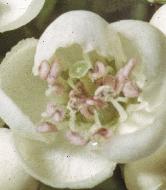
Hawthorn |
Although introduced into cultivation in the UK in the late 18th century, it was not successfully grown until the mid-19th century. It is very common in gardens, parks and amenity plantings, often established in mass plantings. It was first recorded in the wild in Cumberland in 1927. Its distribution in the wild is increasing. Japanese rose is listed under Schedule 9 to the Wildlife and Country-side Act 1981 with respect to England and Wales. As such, it is an offence to plant or otherwise allow this species to grow in the wild. It is also an offence to possess it in the UK. For details of legislation go to Department for Environment Food and Rural Affairs. |
GrassBase - The Online World Grass Flora:-
Recommended Plants for Wildlife in different situations
|
||||||||||||||||||||||||||||||||||||||||||||||||||||||||||||||||||||||||||||||||||||||||||||||
From the Ivydene Gardens Box to Crowberry Wild Flower Families Gallery: |
|
|||||||||||||||||||||||||||||||||||||||||||||||||||||||||||||||||||||||||||||||||||||||||||||
The Bumblebee Pages website is divided into five major areas:
FORCED INDOOR BULBS in Window Box Gardens. Once these have flowered don't throw them out. Cut off the heads (unless you want seed) then put them somewhere that the leaves can get the sun. This will feed the bulb for the next year. Once the leaves have died you can plant the bulbs outside and they will flower at the normal (unforced) time next year. The narcissus Tete-a-tete is particularly good, and provides early colour and a delicate fragrance too. Below I have listed groups of plants. I have tried to include at least four plants in each list as you may not be able to find all of them, although, unless you have a very large windowbox, I would recommend that you have just three in each box. |
|
|||||||||||||||||||||||||||||||||||||||||||||||||||||||||||||||||||||||||||||||||||||||||||||
Theme |
Plants |
Comments |
||||||||||||||||||||||||||||||||||||||||||||||||||||||||||||||||||||||||||||||||||||||||||||
Thyme |
Thymus praecox, wild thyme Thymus pulegioides Thymus leucotrichus Thymus citriodorus |
Thymes make a very fragrant, easy to care for windowbox, and an excellent choice for windy sites. The flower colour will be pinky/purple, and you can eat the leaves if your air is not too polluted. Try to get one variegated thyme to add a little colour when there are no flowers. |
||||||||||||||||||||||||||||||||||||||||||||||||||||||||||||||||||||||||||||||||||||||||||||
Herb |
Sage, mint, chives, thyme, rosemary |
Get the plants from the herb section of the supermarket, so you can eat the leaves. Do not include basil as it need greater fertility than the others. Pot the rosemary up separately if it grows too large. |
||||||||||||||||||||||||||||||||||||||||||||||||||||||||||||||||||||||||||||||||||||||||||||
Mints |
Mentha longifolia, horse mint Mentha spicata, spear mint Mentha pulgium, pennyroyal Mentha piperita, peppermint Mentha suaveolens, apple mint |
Mints are fairly fast growers, so you could start this box with seed. They are thugs, though, and will very soon be fighting for space. So you will either have to thin and cut back or else you will end up with one species - the strongest. The very best mint tea I ever had was in Marrakesh. A glass full of fresh mint was placed in front of me, and boiling water was poured into it. Then I was given a cube of sugar to hold between my teeth while I sipped the tea. Plant this box and you can have mint tea for months. |
||||||||||||||||||||||||||||||||||||||||||||||||||||||||||||||||||||||||||||||||||||||||||||
Heather |
Too many to list See Heather Shrub gallery |
For year-round colour try to plant varieties that flower at different times of year. Heather requires acid soils, so fertilise with an ericaceous fertilser, and plant in ericaceous compost. Cut back after flowering and remove the cuttings. It is best to buy plants as heather is slow growing. |
||||||||||||||||||||||||||||||||||||||||||||||||||||||||||||||||||||||||||||||||||||||||||||
Blue |
Ajuga reptans, bugle Endymion non-scriptus, bluebell Myosotis spp., forget-me-not Pentaglottis sempervirens, alkanet |
This will give you flowers from March till July. The bluebells should be bought as bulbs, as seed will take a few years to flower. The others can be started from seed. |
||||||||||||||||||||||||||||||||||||||||||||||||||||||||||||||||||||||||||||||||||||||||||||
Yellow |
Anthyllis vulneraria, kidney vetch Geum urbanum, wood avens Lathryus pratensis, meadow vetchling Linaria vulgaris, toadflax Lotus corniculatus, birdsfoot trefoil Primula vulgaris, primrose Ranunculus acris, meadow buttercup Ranunculus ficaria, lesser celandine |
These will give you flowers from May to October, and if you include the primrose, from February. Try to include a vetch as they can climb or trail so occupy the space that other plants can't. All can be grown from seed. |
||||||||||||||||||||||||||||||||||||||||||||||||||||||||||||||||||||||||||||||||||||||||||||
White |
Trifolium repens, white clover Bellis perennis, daisy Digitalis purpurea alba, white foxglove Alyssum maritimum Redsea odorata, mignonette |
All can be grown from seed. The clover and daisy will have to be cut back as they will take over. The clover roots add nitrogen to the soil. The mignonette flower doesn't look very special, but the fragrance is wonderful, and the alyssum smells of honey. |
||||||||||||||||||||||||||||||||||||||||||||||||||||||||||||||||||||||||||||||||||||||||||||
Pink |
Lychnis flos-cucli, ragged robin Scabiosa columbaria, small scabious Symphytum officinale, comfrey |
The comfrey will try to take over. Its leaves make an excellent fertiliser, and are very good on the compost heap, though windowbox gardeners rarely have one. |
||||||||||||||||||||||||||||||||||||||||||||||||||||||||||||||||||||||||||||||||||||||||||||
Fragrant |
Lonicera spp., honeysuckle Alyssum maritimum Redsea odorata, mignonette Lathyrus odoratus, sweet pea |
The sweet pea will need twine or something to climb up, so is suitable if you have sliding windows or window that open inwards. You will be rewarded by a fragrant curtain every time you open your window. |
||||||||||||||||||||||||||||||||||||||||||||||||||||||||||||||||||||||||||||||||||||||||||||
Spring bulbs and late wildflowers |
Galanthus nivalis, snowdrop Narcissus pseudonarcissus, narcissius Crocus purpureus, crocus Cyclamen spp. |
The idea of this box is to maximize your space. The bulbs (cyclamen has a corm) will flower and do their stuff early in the year. After flowering cut the heads off as you don't want them making seed, but leave the leaves as they fatten up the bulbs to store energy for next year. The foliage of the wildflowers will hide the bulb leaves to some extent. Then the wildflowers take over and flower till autumn |
||||||||||||||||||||||||||||||||||||||||||||||||||||||||||||||||||||||||||||||||||||||||||||
Aster spp., Michaelmas daisy Linaria vulgaris, toadflax Lonicera spp., honeysuckle Succisa pratensis, devil's bit scabious Mentha pulgium, pennyroyal |
||||||||||||||||||||||||||||||||||||||||||||||||||||||||||||||||||||||||||||||||||||||||||||||
|
|
|||||||||||||||||||||||||||||||||||||||||||||||||||||||||||||||||||||||||||||||||||||||||||||
Bee Garden in Europe or North America |
|
|
||||||||||||||||||||||||||||||||||||||||||||||||||||||||||||||||||||||||||||||||||||||||||||
Wildlife-friendly Show Gardens With around 23 million gardens in the UK, covering 435,000 ha, gardens have great potential as wildlife habitats. And, with a bit of planning and a few tweaks, they can indeed be wonderful places for a whole host of creatures, from birds to bees, butterflies, frogs and toads, as well as many less obvious creatures. Wildlife-friendly gardens can be beautiful too, and a colourful garden full of life can lift the spirits and give immense pleasure, and can also help to connect people, both young and old, with our wonderful wildlife. The eight-point plan for a wildlife-friendly garden
Many of our gardens at Natural Surroundings demonstrate what you can do at home to encourage wildlife in your garden. Follow the links below to explore our show gardens, and when you visit, be sure to pick up a copy of our Wildlife Gardening Trail guide
|
||||||||||||||||||||||||||||||||||||||||||||||||||||||||||||||||||||||||||||||||||||||||||||||
From the Ode to the London Plane Tree by Heather Greaves:- "They are also very important to the city of New York (and not just because the leaf is the Parks Department logo). The London plane, usually considered Platanus x acerifolia but also known by other Latin epithets, is not really native, although it very closely resembles the native American sycamore, Platanus occidentalis. Actually, it is probably a cross between this American species and Platanus orientalis, a Eurasian relative. In any case, it has been widely planted as a city tree for decades, which turns out to be a good idea. In its assessment of the New York City urban forest, the US Forest Service Northern Research Station determined that the London plane is the most important city tree we have. They base this conclusion on several factors. For one thing, London planes have a very high leaf area per tree; that is, the London plane gives us a lot more pretty, shady, air-filtering, evaporatively-cooling leaves per single trunk than most other species in the city. In fact, according to the Forest Service, London planes make up just 4% of the city tree population, but represent 14% of the city's total leaf area. (Compare this with the virulently invasive tree of heaven [Ailanthus altissima], which constitutes 9% of the tree population but only about 4% of the total leaf area.) Also, because they tend to become very tall and have large canopies, London planes are our best trees for carbon storage and sequestration. They are holding on to about 185,000 tons of carbon (14% of the total urban tree carbon pool), and each year they sequester another 5,500 or so tons (about 13% of all the carbon sequestered by city trees each year). That makes them both gorgeous and highly beneficial: all in all, good trees to have around." |
||||||||||||||||||||||||||||||||||||||||||||||||||||||||||||||||||||||||||||||||||||||||||||||
", in the Vermont hills, is a biodynamic farm using organic practices. Natural minerals and planned grazing with American Milking Devon cattle rejuvenate the soil, sequester carbon and yield nutrient dense foods and medicines including milk, grass fed meats, eggs, fermented vegetables (sauerkraut and kimchi / kim-chi), and herbal tinctures. We offer educational opportunities, farm visits, and seminars on nutrition, growing and preparing nutrient dense food, diversified farming and fermentation. |
||||||||||||||||||||||||||||||||||||||||||||||||||||||||||||||||||||||||||||||||||||||||||||||
Edible Plants Club website "has been created largely from the point of view of a plantsman interested in the many different resources available in the plant world, especially edible and medicinal plants. What started me off on this path was reading Robert Harts book Forest Gardening and then Ken Fearns Plants for a Future and also Richard Mabeys 'Food For Free' along the way. This also led to me to change my career and become a gardener."
'Sort out your soil' - A practical guide to Green Manures, and Frequently Asked Questions from the Receptionist Myrtle of Cotswold Grass Seeds.
Saltmarsh Management Manual from the Environment Agency informs you about:-
|
||||||||||||||||||||||||||||||||||||||||||||||||||||||||||||||||||||||||||||||||||||||||||||||
Sewage Pollution in the UK rivers and its surrounding Seas:- This is being ignored by the UK Government, Local UK Government and Commerce, so again they will do nothing about this, and continue to ignore the death of the wildlife, marine life, the dairy, farming and fishing industries, together with the onland and ocean producers of oxygen during 2024. Why not visit the UK and add your excrement to the increase of 102% of raw sewage spills into rivers and the seas in 2023 from 2022, while 240,000 new homes will be built each year without the future Labour or Conservative government stopping their excrement being offloaded into the sea to affect all the other countries surrounding us. If 92% of the seagrass has been smothered that means nowhere round the UK is either safe to swim in or for its fish and other marine life. The same could be said about the farmed salmon in the seas round Scotland and any fish caught in the rivers of the UK. Ocean Pollution as reported by the Marine Conservation Society Marine pollution is diverse, from tiny fibres which shed from clothes, to chemicals washed down the sink. Pollutants, including plastic, chemicals and bacteria travel from our towns and cities to our seas, as well as from activities directly in our ocean. If we don’t tackle pollution at source, these highly persistent chemicals and plastics will continue to increase in our ocean causing untold damage. That's where we come in.
------
Marine Conservation Society - Seagrass: The ocean superhero at risk from sewage:-Seagrass meadows are a key player in helping to combat climate change – but untreated sewage pollution in our seas is threatening their future. Seagrass meadows are the Swiss army knife of marine habitats. They create hotspots for biodiversity and provide vital nursery habitats for various fish species. Long seagrass blades buffer wave energy, protecting our shores against coastal erosion and storms. Their canopies slow the flow of water, drawing down suspended matter like pollutants and excess nutrients from the water column and burying it in the sediment below. This also makes them one of the oldest and most effective carbon storage technologies, accounting for an estimated 10-18% of ocean carbon storage while occupying only 0.1% of the seafloor. Unlike terrestrial habitats like forests, seagrass doesn't release the carbon it has captured back into the atmosphere when it decomposes. If undisturbed, seagrass can store carbon for thousands of years. Seagrasses do a lot of heavy lifting in mitigating the stress that we inflict on the ocean. As ecosystem engineers, they’re skilled at adapting their environment to suit their needs. However, the flow of untreated sewage discharges into UK seas is posing a problem for seagrass. Untreated sewage discharges contain excess nutrients and pathogens, which encourage faster-growing macroalgae which reduce light availability and epiphytic algae which smother the seagrass leaves. Research by Cardiff University and Swansea University indicates that insufficient monitoring and management of sewage and wastewater treatment threatens seagrass meadows around the UK. Each of the 11 sites sampled in the study, ten of which were within marine protected areas, contained seagrass that was contaminated by nutrients “of a human and livestock waste origin”. The findings show that sewage pollution is a stressor to seagrass – one whose effects are far-reaching and continues to have an impact far from its source. The only effective way to protect seagrass and the whole marine environment from this stress is to tackle the issue at source. We have already lost 92% of seagrass meadows in the UK, and their survival and recovery is further undermined by poor water quality. However, we can reverse this trend. Removing stressors, such as untreated sewage pollution, is the most important factor in allowing seagrass to recover and we have seen seagrass successfully recolonise areas which were previously wiped out by sewage outfall. Our seagrass meadows are an essential ally against global warming, a biodiversity crisis, and pervasive pollution. These superhero habitats need our help and a first major step towards this is to stop releasing untreated sewage into our seas.
---------
The sewage system is overflowing so that not only will your excrement go into the river and then the sea, but you will drink from that same river. Water for drinking purposes is processed from 10 places in the River Thames within London area, while 38,000,000 tons of waste is poured into that same River Thames from London annually, as well as the other 1000s of tons from the other polluters along the remainder of 215 miles.
-----------
When you wish to buy British grown vegetables and fruit, you will have a problem with many farms being forced to close within 12 months from November 2023.
------ Farmers fear food shortages caused by green schemes - they are warning that vegetables and grains could be next to the egg shortages as environmental schemes take large areas of land out of use for food production. Stephen Holt's main crop is winter wheat, but to ensure its success he grows a "break crop" of oil seed rape and beans between wheat harvests to break the cycle of weeds, diseases and pests and to improve soil health. He sells the break crops as a commercial product to make money on top of his wheat harvest. |
||||||||||||||||||||||||||||||||||||||||||||||||||||||||||||||||||||||||||||||||||||||||||||||
Suppliers of British native-origin seeds and plants:- "Flora locale maintains a list of suppliers who should be able to supply seeds and/or plants of known British (and sometimes known local) native-origin. Although not all their stock will necessarily be of British native-origin, they should be able to provide details of provenance on request. View Flora locale's list of suppliers - follow the "Suppliers of native flora" link. You may also wish to view the Really Wild Flowers site, which contains a wealth of information about creating habitats and cultivating native species." |
British Native Plants List of Edible Plants:- "I thought it would be useful to include native plant lists from different regions of the world. This list is from British Isles (including Ireland and the Channel Islands) and was compiled by Professor Clive Stace of the University of Leicester for the FFF conference on Native Plants held at the Linnean Society of London, June 1997. It can be found here at the postcode plants database." |
About the Hardy Orchid Society The Society’s aim is to promote interest in the study of native European Orchids and those from similar temperate climates throughout the world. The varied aspects covered include field study, cultivation and propagation, photography, taxonomy and systematics, and practical conservation. Services for members include: The Journal of the Hardy Orchid Society, issued quarterly and distributed free of charge to all paid-up members. Members are encouraged to use the Journal to publish their own articles on any relevant topics of interest. Field Trips led by HOS members in the “Orchid Season”, visiting interesting orchid sites in various parts of the British Isles. Access to the HOS Seed Bank, maintained to encourage the propagation of hardy orchids, and to facilitate the distribution of members’ surplus seed. |
||||||||||||||||||||||||||||||||||||||||||||||||||||||||||||||||||||||||||||||||||||||||||||
Plants for moths (including larval food plants and adult nectar sources) from Gardens for Wildlife - Practical advice on how to attract wildlife to your garden by Martin Walters as an Aura Garden Guide. Published in 2007 - ISBN 978 1905765041:- |
Marjoram - Origanum officinale |
|||||||||||||||||||||||||||||||||||||||||||||||||||||||||||||||||||||||||||||||||||||||||||||
From the Ode to the London Plane Tree by Heather Greaves:- "They are also very important to the city of New York (and not just because the leaf is the Parks Department logo). The London plane, usually considered Platanus x acerifolia but also known by other Latin epithets, is not really native, although it very closely resembles the native American sycamore, Platanus occidentalis. Actually, it is probably a cross between this American species and Platanus orientalis, a Eurasian relative. In any case, it has been widely planted as a city tree for decades, which turns out to be a good idea. In its assessment of the New York City urban forest, the US Forest Service Northern Research Station determined that the London plane is the most important city tree we have. They base this conclusion on several factors. For one thing, London planes have a very high leaf area per tree; that is, the London plane gives us a lot more pretty, shady, air-filtering, evaporatively-cooling leaves per single trunk than most other species in the city. In fact, according to the Forest Service, London planes make up just 4% of the city tree population, but represent 14% of the city's total leaf area. (Compare this with the virulently invasive tree of heaven [Ailanthus altissima], which constitutes 9% of the tree population but only about 4% of the total leaf area.) Also, because they tend to become very tall and have large canopies, London planes are our best trees for carbon storage and sequestration. They are holding on to about 185,000 tons of carbon (14% of the total urban tree carbon pool), and each year they sequester another 5,500 or so tons (about 13% of all the carbon sequestered by city trees each year). That makes them both gorgeous and highly beneficial: all in all, good trees to have around." |
||||||||||||||||||||||||||||||||||||||||||||||||||||||||||||||||||||||||||||||||||||||||||||||
UKButterflies Larval Foodplants website page lists the larval foodplants used by British butterflies. The name of each foodplant links to a Google search. An indication of whether the foodplant is a primary or secondary food source is also given. Please note that the Butterfly you see for only a short time has grown up on plants as an egg, caterpillar and chrysalis for up to 11 months, before becoming a butterfly. If the plants that they live on during that time are removed, or sprayed with herbicide, then you will not see the butterfly. |
||||
Plants used by the Butterflies follow the Plants used by the Egg, Caterpillar and Chrysalis as stated in |
||||
Plant Name |
Butterfly Name |
Egg/ Caterpillar/ Chrysalis/ Butterfly |
Plant Usage |
Plant Usage Months |
Egg, |
1 egg under leaf. |
10 days in May-June |
||
Egg, |
Eggs laid in batches encircling the branch of the food plant. |
Hatches after 18-22 days in April. |
||
Egg, |
Groups of eggs on upper side of leaf. |
- |
||
Egg, |
1 egg at base of plant. |
Late August-April |
||
Egg, |
Groups of eggs on upper side of leaf. |
- |
||
Egg, |
1 egg laid on underside of leaflets or bracts. |
7 days in June. |
||
Egg, |
1 egg laid on underside of leaflets or bracts. |
7 days in June. |
||
Egg, |
1 egg laid under the leaf or on top of the flower. |
7 days in August. |
||
Egg, |
1 egg on underside of a flower bud on its stalk. |
7 days. |
||
Egg, |
1 egg on underside of a flower bud on its stalk. |
7 days. |
||
Egg, |
1 egg under leaf. |
10 days in May-June. |
||
Egg, |
1 egg on leaf. |
2 weeks |
||
Cabbages - Large White eats all cruciferous plants, such as cabbages, mustard, turnips, radishes, cresses, nasturtiums, wild mignonette and dyer's weed |
Egg,
|
40-100 eggs on both surfaces of leaf. |
May-June and August-Early September. 4.5-17 days. |
|
Egg, |
1 egg on underside of leaf. |
May-June and August. 7 days. |
||
Cabbages:- |
Egg, |
1 egg on underside of leaf. |
July or August; hatches in 3 days. |
|
Cabbages:- |
Egg, |
1 egg laid in the tight buds and flowers. |
May-June 7 days. |
|
Cherry with |
Egg, |
Eggs laid in batches encircling the branch of the food plant. |
Hatches after 18-22 days in April. |
|
Egg, |
Groups of eggs on upper side of leaf. |
- |
||
Egg, |
1 egg on leaf. |
10 days in May-June. |
||
Egg, |
1 egg on leaf. |
6 days in May-June. |
||
Egg, |
1 egg under leaf. |
|
||
|
(Common CowWheat, Field CowWheat) |
Egg, |
Eggs laid in batches on the under side of the leaves. |
Hatches after 16 days in June. |
|
Currants |
Egg, |
Groups of eggs on upper side of leaf. |
|
|
Egg, |
Eggs laid in batches on the under side of the leaves. |
Hatches after 20 days in July. |
||
Dog Violet with |
Egg, |
1 egg on oak or pine tree trunk |
15 days in July. |
|
Dog Violet with |
Egg, |
1 egg on leaf or stem. |
Hatches after 15 days in May-June. |
|
Dog Violet with |
Egg, |
1 egg on leaf or stem. |
Hatches after 10 days in May-June. |
|
Egg, |
1 egg on underside of a flower bud on its stalk. |
7 days. |
||
Egg, |
Eggs laid in batches encircling the branch of the food plant. |
Hatches after 18-22 days in April. |
||
False Brome is a grass (Wood Brome, Wood False-brome and Slender False-brome) |
Egg, |
1 egg under leaf. |
... |
|
Egg, |
Eggs laid in batches on the under side of the leaves. |
Hatches after 20 days in July. |
||
Egg, |
1 egg laid on underside of leaflets or bracts. |
7 days in June. |
||
Egg, |
1 egg on leaf or stem. |
Hatches after 10 days in May-June. |
||
Egg, |
1 egg on underside of a flower bud on its stalk. |
7 days. |
||
Egg, |
1 egg laid under the leaf or on top of the flower. |
7 days in August. |
||
Egg, |
1 egg on leaf. 5 or 6 eggs may be deposited by separate females on one leaf. |
14 days in July-August. |
||
Egg, |
1 egg on underside of a flower bud on its stalk. |
7 days. |
||
Egg, |
1 egg laid in the tight buds and flowers. |
May-June 7 days. |
||
Egg, |
Eggs laid in batches on the under side of the leaves. |
Hatches after 20 days in July. |
||
Egg, |
Groups of eggs on upper side of leaf. |
|
||
Egg, |
1 egg under leaf. |
1 then |
||
Egg, |
1 egg on underside of a flower bud on its stalk. |
7 days. |
||
Egg, |
1 egg at base of plant. |
Late August-April. |
||
Egg, |
1 egg on leaf. |
10 days in May-June. |
||
Egg, |
1 egg on leaf. |
2 weeks |
||
Egg, |
1 egg on leaf. |
6 days in May-June. |
||
Egg, |
1 egg on underside of leaf. |
May-June and August. 7 days. |
||
Egg, |
1 egg on leaf. 5 or 6 eggs may be deposited by separate females on one leaf. |
14 days in July-August. |
||
Narrow-leaved Plantain (Ribwort Plantain) |
Egg, |
Eggs laid in batches on the under side of the leaves. |
Hatches after 16 days in June. |
|
Narrow-leaved Plantain (Ribwort Plantain) |
Egg, |
Eggs laid in batches on the under side of the leaves. |
Hatches after 16 days in June. |
|
Nasturtium from Gardens |
Egg, |
1 egg on underside of leaf. |
May-June and August. 7 days. |
|
Egg, |
1 egg on tree trunk |
15 days in July. |
||
Mountain pansy, |
Egg, Chrysalis |
1 egg laid under the leaf or on top of the flower. |
7 days in August. 3 weeks in September |
|
Egg, |
1 egg on tree trunk. |
15 days in July. |
||
Egg, |
Eggs laid in batches on the under side of the leaves. |
Hatches after 20 days in July. |
||
Egg, |
Eggs laid in batches encircling the branch of the food plant. |
Hatches after 18-22 days in April. |
||
Egg, |
Groups of eggs on upper side of leaf. |
- |
||
Egg, |
1 egg under leaf. |
|
||
Egg, |
1 egg laid under the leaf or on top of the flower. |
7 days in August. |
||
Egg, |
Eggs laid in batches encircling the branch of the food plant. |
Hatches after 18-22 days in April. |
||
Egg, |
Eggs laid in batches on the under side of the leaves. |
Hatches after 16 days in June. |
||
Egg, |
1 egg on underside of a flower bud on its stalk. |
7 days. |
||
Egg, |
1 egg on underside of a flower bud on its stalk. |
7 days. |
||
Egg, |
Groups of eggs on upper side of leaf. |
|
||
Egg, |
1 egg under leaf. |
|
||
Egg, |
1 egg on leaf. |
2 weeks |
||
Trefoils 1, 2, 3 |
Egg, |
1 egg on leaf. |
6 days in May-June. |
|
Egg, |
Groups of eggs on upper side of leaf. |
- |
||
Egg, |
1 egg laid on underside of leaflets or bracts. |
7 days in June. |
||
Violets:- |
Egg, |
1 egg on underside of leaf or on stalk. |
July-August for 17 days. |
|
Violets:- |
Egg, |
1 egg on stem or stalk near plant base. |
July to hatch in 8 months in March. |
|
Egg, |
1 egg on leaf. |
2 weeks. |
||
Egg, |
Eggs laid in batches encircling the branch of the food plant. |
Hatches after 18-22 days in April. |
||
Egg, |
1 egg on leaf. 5 or 6 eggs may be deposited by separate females on one leaf. |
14 days in July-August. |
||
Willow |
Egg, |
Eggs laid in batches encircling the branch of the food plant. |
Hatches after 18-22 days in April. |
|
Egg, |
Eggs laid in batches on the under side of the leaves. |
Hatches after 20 days in July. |
||
Plants used by the Butterflies |
||||
Plant Name |
Butterfly Name |
Egg/ Caterpillar/ Chrysalis/ Butterfly |
Plant Usage |
Plant Usage Months |
Asters |
Butterfly |
Eats nectar. |
|
|
Runner and Broad Beans in fields and gardens |
Butterfly |
Eats nectar |
April-June or July-September. |
|
Aubretia in gardens |
Butterfly |
Eats nectar |
May-June or August till killed by frost and damp in September-November |
|
Butterfly |
Eats sap exuding from trunk. |
April-Mid June and Mid July-Early September for second generation. |
||
Butterfly |
Eats nectar. |
20 days. |
||
Butterfly |
Eats nectar |
May-June |
||
Holly Blue |
Butterfly |
Eats nectar |
April-Mid June and Mid July-Early September for second generation. |
|
Butterfly |
Eats nectar. |
July-October. |
||
Buddleias |
Butterfly |
Eats nectar. |
July-October. |
|
Wood White |
Butterfly |
Eats nectar |
May-June. |
|
Cabbage and cabbages in fields |
Butterfly |
Eats nectar |
April-June or July-September. |
|
Butterfly |
Eats nectar |
July-October |
||
Adonis Blue |
Butterfly |
Eats nectar. |
1 Month during Mid-May to Mid-June or during August-September |
|
Pale Clouded Yellow |
Butterfly |
Eats nectar |
May-June or August till killed by frost and damp in September-November |
|
Cow-wheat |
Butterfly |
Eats nectar |
June-July |
|
Butterfly |
Eats nectar |
May-June |
||
Butterfly |
Eats nectar |
April-Mid June and Mid July-Early September for second generation. |
||
Butterfly |
Eats nectar. |
3 weeks between May and September |
||
Germander Speedwell (Veronica chamaedrys - Birdseye Speedwell) |
Butterfly |
Eats nectar |
June-July |
|
Butterfly |
Eats nectar. |
July-October. |
||
Butterfly |
Eats nectar |
30 days in May-June. |
||
Butterfly |
Eats nectar |
May-September |
||
Butterfly |
Eats nectar. |
May-June for 18 days. |
||
Butterfly |
Eats nectar. |
July-October |
||
Butterfly |
Eats nectar. |
1 Month. |
||
Butterfly |
Eats nectar. |
July-October. |
||
Painted Lady |
Butterfly |
Eats nectar |
July-October. |
|
Marigolds in gardens |
Butterfly |
Eats nectar |
May-June or August till killed by frost and damp in September-November |
|
Butterfly |
Eats nectar. |
1 Month during Mid-May to Mid-June or during August-September. |
||
Michaelmas Daisies |
Butterfly |
Eats nectar. |
July-October |
|
Butterfly |
Eats nectar |
April-June or July-September. |
||
Narrow-leaved Plantain (Ribwort Plantain) |
Butterfly |
Eats nectar |
June-July |
|
Nasturtiums in gardens |
Butterfly |
Eats nectar |
April-June or July-September |
|
Butterfly |
Eats sap exuding from trunk. |
April-Mid June and Mid July-Early September for second generation. |
||
Butterfly |
Eats nectar |
June. |
||
Butterfly |
Eats nectar |
May-June. |
||
Butterfly |
Eats nectar |
July-October. |
||
Butterfly |
Eats nectar |
July-May |
||
Butterfly |
Eats nectar |
7 weeks in July-August. |
||
Comma |
Butterfly |
Eats nectar. |
July-October. |
|
Butterfly |
Eats nectar. |
3 weeks between May and September |
||
Trefoils 1, 2, 3 |
Butterfly |
Eats nectar. |
1 Month during Mid-May to Mid-June or during August-September |
|
Butterfly |
Eats nectar. |
20 days in August. |
||
Butterfly |
Eats nectar |
June.
|
||
Butterfly |
Eats nectar |
June-July |
||
Apple/Pear/Cherry/Plum Fruit Tree Blossom in Spring |
Butterfly |
Eats Nectar |
April-May |
|
Rotten Fruit |
Butterfly |
Drinks juice |
July-September |
|
Tree sap and damaged ripe fruit, which are high in sugar |
Butterfly |
Hibernates inside hollow trees or outhouses until March. Eats sap or fruit juice until April. |
10 months in June-April |
|
Wild Flowers |
Large Skipper |
Butterfly |
Eats Nectar |
June-August |
Links to the other Butterflies:- Black Hairstreak |
Topic - Wildlife on Plant Photo Gallery. Some UK native butterflies eat material from UK Native Wildflowers and live on them as eggs, caterpillars (Large Skipper eats False Brome grass - Brachypodium sylvaticum - for 11 months from July to May as a Caterpillar before becoming a Chrysalis within 3 weeks in May) chrysalis or butterflies ALL YEAR ROUND. |
Wild Flower Family Page (the families within "The Pocket Guide to Wild Flowers" by David McClintock & R.S.R. Fitter, Published in 1956 They are not in Common Name alphabetical order and neither are the common names of the plants detailed within each family. The information in the above book is back-referenced to the respective page in "Flora of the British Isles" by A.R. Clapham of University of Sheffield, |
||
My Comments about the proposed Cobtree Manor Park is where I and my friend used to take her dog for a 2 hour walk every week. See Map Cobtree Manor Park and Cobtree Manor 18 hole Public Golf Course (1golf.eu picture shows the golf course with its fairways to the left of the point 2/3rds across the picture from the left, with 2 grassed areas dotted with trees behind a hedge of trees above that golf course - that area is where people walk their dogs) occupy 50 acres of parkland displaying a diverse and maturing collection of trees and shrubs. I would be surprised if Cobtree Manor Park grassed area occupied more than 6 of those 50 acres. The Park Ranger and Maidstone Borough Council have decided that every dog will be put on a lead at this public place with no method of allowing that dog any exercise unless the owners can run with the dog under their byelaws of 1998. Cobtree Manor Park
My Comments The proposed rerouting of the Bridle Path would also disturb the declining numbers of Great Crested Newts who use that pond. Since there have only been 2 visitors to this site who have emailed me in the last 2 years, the above comments may be a waste of time, since written comments on paper to the Cobtree Officer Brian Latimer or emailed to him at brianlatimer@maidstone.gov.uk must be in by Friday 16th April 2010 and not emailed to me.
---------
The following is an excerpt from my Comments about the proposed destruction of the wildlife habitats at Cobtree Manor Park in the summer of 2010 from the bottom part of my Mission Statement page "We would be sorry to lose the butterflies on the bluebells, bramble and ivy that would be restricted to only the very small area of proposed Wildlife Meadow by the Woods at the bottom of a hill with water springs on it. The wildlife is now being excluded from all the other areas by the "pruning", so that the nettles, brambles etc which had for instance the butterfly life cycle included; are now being ruthlessly removed to create a garden, not a park, with neat little areas." The life and death of a flailed cornish hedge was repeated at Cobtree Manor Park,
When you look at the life history graphs of each of the 68 butterflies of Britain, you will see that they use plants throughout all 12 months - the information of what plant is used by the egg, caterpillar, chrysalis or butterfly is also given in the above first column.
---------
THE LIFE AND DEATH OF A FLAILED CORNISH HEDGE - This details that life and death from July 1972 to 2019, with the following result:- End note, June 2008. I hear spring vetch has been officially recorded somewhere in West Cornwall and confirmed as a presence in the county, so perhaps I can be permitted to have seen it pre-1972 in the survey mile. I wonder where they found it? It's gone from hedges where it used to be, along with other scarcities and so-called scarcities that used to flourish in so many hedges unrecorded, before the flail arrived. I have given careful thought to including mention of some of the plants and butterflies. So little seems to be known of the species resident in Cornish hedges pre-flail that I realise some references may invite scepticism. I am a sceptic myself, so sympathise with the reaction; but I have concluded that, with a view to re-establishing vulnerable species, it needs to be known that they can with the right management safely and perpetually thrive in ordinary Cornish hedges. In future this knowledge could solve the increasingly difficult question of sufficient and suitable sites for sustainable wild flower and butterfly conservation - as long as it is a future in which the hedge-flail does not figure.
CHECK-LIST OF TYPES OF CORNISH HEDGE FLORA by Sarah Carter of Cornish Hedges Library:-
Titles of papers available on www.cornishhedges.co.uk:-
THE GUILD OF CORNISH HEDGERS is the non-profit-making organisation founded in 2002 to support the concern among traditional hedgers about poor standards of workmanship in Cornish hedging today. The Guild has raised public awareness of Cornwall's unique heritage of hedges and promoted free access to the Cornish Hedges Library, the only existing source of full and reliable written knowledge on Cornish hedges." |
||||
|
|||||||||||||||||||||||||||||||||||||||||||||||||||||||||||||||||||||||||||||
ROSE FAMILY WILD FLOWER GALLERY |
GBIF makes available data that are shared by hundreds of data publishers from around the world. These data are shared according to the GBIF Data Use Agreement, which includes the provision that users of any data accessed through or retrieved via the GBIF Portal will always give credit to the original data publishers. What is the Global Biodiversity Information Facility? GBIF enables free and open access to biodiversity data online. We’re an international government-initiated and funded initiative focused on making biodiversity data available to all and anyone, for scientific research, conservation and sustainable development. GBIF provides three core services and products:
|
||||||||||||||||||||||||||||||||||||||||||||||||||||||||||||||||||||||||||||
WILD FLOWER GALLERY INDEX LINK TO WILDFLOWER PLANT DESCRIPTION PAGE Wildflower Garden Use page from Evergreen Perrennial Shape Gallery. FLOWER COLOUR SEED COLOUR BED PICTURES HABITAT TABLES See Explanation of Structure of this Website with User Guidelines to aid your use of this website. |
WILD FLOWER FAMILY
|
WILD FLOWER FAMILY
|
WILD FLOWER FAMILY
|
WILD FLOWER FAMILY
|
Wild About Britain is home to hundreds of thousands of pages about British wildlife, the Environment and the Great Outdoors; from birds, butterflies, fungi and trees to climate change, marine life, astronomy and the weather. We're also a huge online community with 35,000 members and more than 3 million unique visitors a year.
World Atlas of Seagrasses by Edmund P. Green and Frederick T. Short - "a group of about sixty species of underwater marine flowering plants, grow in the shallow marine and estuary environments of all the world's continents except Antarctica. The primary food of animals such as manatees, dugongs, and green sea turtles, and critical habitat for thousands of other animal and plant species, seagrasses are also considered one of the most important shallow-marine ecosystems for humans, since they play an important role in fishery production. Though they are highly valuable ecologically and economically, many seagrass habitats around the world have been completely destroyed or are now in rapid decline. The World Atlas of Seagrasses is the first authoritative and comprehensive global synthesis of the distribution and status of this critical marine habitat. "
Over 300 accounts of the Flora of the British Isles have been published in
Bookreview of A.R. Clapham, T.G. Tutin et E.F. Warburg Flora of the British Isles. Second Edition. Cambridge University Press.
Ferns in Britain and Ireland - A guide to ferns, horsetails, clubmosses
Selected References from KingdomPlantae.net National Audubon Society Field Guide to North American Wildflowers, Niering and Olmstead Peterson Field Guides Eastern/Central Medicinal Plants, Steven Foster and James A. Duke Peterson Field Guides Edible Wild Plants, Lee Allen Peterson Stalking the Healthful Herbs, Euell Gibbons Identifying and Harvesting Edible and Medicinal Plants, Steve Brill The Encyclopedia of Edible Plants of North America, Francois Couplan, Ph.D. Tom Brown's Guide to Wild Edible and Medicinal Plants, Tom Brown, Jr. A Modern Herbal, Volume II, Mrs. M. Grieve Weeds, Alexander C Martin
Database of Insects and their Food Plants from the Biological Records Centre:- This database is primarily a collation of published interactions between Great Britain 's invertebrate herbivores (insects and mites) and their host plants. There are also some interactions for the invertebrates closely associated with herbivores, such as predators, parasitoids, cleptoparasites and mutualists. DBIF contains about 47,000 interactions for roughly 9,300 invertebrate taxa (species, sub-species and forms) and 5,700 plant taxa (species, genera and broader groupings).
Helping Earth's Sustainable Management with a Plant IT'S SO PRODUCTIVE! In fact, Henry Ford's first car ran on hemp-methanol! - and at just a fraction of the cost of petroleum alternatives. Alternatives to coal, fuel oil, acetone, ethyl, tar pitch and creosote can be derived - from this one single plant!
Hemp (cannabis sativa) - 1% of Irelands landmass, growing hemp for fuel, would provide all the energy needs for the country each year, keeping the money with the farmers and keeping the rural economies active and this is also an environmentally friendly fuel. Hemp only has 100,000 commercial uses, so is not worth growing.
Hours of the Victorian Flower Clock 1:00 7:00 |
||||||||||||||||||||||||||||||||||||||||||||||||||||||||||||||||||||||||
Superceeded Wildflower Indices After clicking on the WILD FLOWER Common Name INDEX link to Wildflower Family Page; |
The process below provides a uniform method for
The following Extra Index of Wildflowers is created in the Borage Wildflower Gallery, to which the Wildflowers found in the above list will have that row entry copied to.
Having transferred the Extra Index row entry to the relevant Extra Index row for the same type of plant in a gallery below; then
|
||||||||||||||||||||||||||||||||||||||||||||||||||||||||||||||||||||||||||||
Cultural Needs of Plants "Understanding Fern Needs |
|||||||||||||||||||||||||||||||||||||||||||||||||||||||||||||||||||||||||||||
KPR - Gardeners Club Slovakia:- "KPR was officially established in 2000 in Slovakia in Europe; however, we supply seeds and plants from all over the world since 1998. Our main object is focused on joining gardeners around the world from all fields of interests to create a big database of seeds and plants (Seeds and Plants Bank of KPR) from around the world. At present, we have 6 main branches (Slovakia, Czechia, Australia, India, Thailand, South Africa and Tanzania) and over 200 co-operators and seeds collectors all over the world. Nowadays we are able to collect and supply over 10 000 species of plants from all over the world. If you are looking for anything, you are at the right place! Although we do not have every plant in our collection yet, but we are expanding daily, step-by-step, seed-by-seed, plant by plant. We believe that soon we will be able to supply (almost) anything! For sale over 10 000 seeds and plants from all over the world - palms, cycads, exotic and frost tolerant shrubs and trees, succulents, carnivorous, annuals, perennials, ornamental grasses, vegetable, etc." "At present, we can collect seeds and plants on request (as well as parts of plants - for example bulbs, cuttings, meristematic tissues, pollen, etc.) from more than 4000 species of plants from 19 European countries. Now we collect in the following countries: Austria, Bulgaria, Czechia, Germany, Spain, Finland, Great Britain, Croatia, Hungary, Lithuania, Latvia, Montenegro, Macedonia, Poland, Portugal, Serbia, Russia, Slovenia, Slovakia. We prepare to collect in the following countries: Albania, Bosnia and Herzegovina, Belarus, Estonia, France, Switzerland, Italy, Kosovo, Norway, Sweden, Ukraine. We are able to collect all species in this area on your request. However, we do not collect protected species and species from the orchids (Orchidaceae). Since 2002, we supply a wide range of European plants annually to both domestic and foreign small gardeners as well as big gardeners' societies, pharmaceutical companies and for scientific research. The Vegetation season in Europe is from March to October. Seeds are usually harvested from August to September, and some species earlier. We provide a guarantee of 2 years for germination seeds. Seeds of some species are available throughout the year, but most of the species are collected on request. If you are searching for anything from Europe, you are at the right place! Contact us and inform yourself about stock availability, prices and terms of supplying. We are able to supply all plant parts as well - seeds, bulbs, cuttings, meristematic issues, pollen etc. We also grow many species in cultivation and supply these as seedlings or young plants for wholesale. If you require seedlings, your order should be placed before April, seeing that the seeds are sown in April."
Colin's virtual Herbarium - "I am Colin Ladyka, and I live in Regina, Saskatchewan, Canada. Native plants are my hobby.
Toxicity of Common Comfrey :-
The Botanical Society of Britain and Ireland – Founded in 1836 as the Botanical Society of London and welcomes both professional and amateur botanists. The society focuses on the study of botany in the British Isles. The British Bryological Society – For the study and conservation of mosses and liverworts worldwide. The British Lichen Society – The first society in the world entirely devoted to the study of lichens. The Natural History Society of Northumbria – Everything you might want to know about NHSN including details of their field meetings, lectures, and nature reserve. Common by Nature – James Common regularly writes about his botanical finds across Newcastle and Northumberland on his personal blog. Help Identifying Plants Online BSBI Plant Crib – Sections from BSBI’s ground-breaking publication make the identification of complex plant families much easier. NatureSpot – Perfect for beginners, this online resource hosts species accounts for many plants also found in the North East. Arable Plant Crib – A series of helpful crib sheets for the UK’s arable plants from the Colour in the Margins project (now ceased). Common’s Cribs – A new series of beginner-friendly crib sheets exploring the identification of various plant families and group. |
|
Handbook of alien species in Europe
Herbaria@home, a ground-breaking new approach to digitising and documenting the archives of the UK's herbaria. This site provides a web-based method for documenting herbarium sheets. We welcome participation in the project, so please read more about the project and if you would like to help then get involved!
Ukwildflowers has lists of English Common Names with their Latin botanical name.
APHOTOFLORA
Since 1972 I (Leif Stridvall) have almost exclusively been working with Nikon 35 mm system cameras as photographic equipment. They have proved to be very reliable and have never let me down. I started with Nikkormat, later exchanging it for Nikon FA (had matrix metering) and ended up with Nikon 801 (had autofocus) adding Nikon F70 as a reserve camera. In 2001 I began shooting digitally, first with Nikon Coolpix 990 and a couple of years later Minolta Dimage 7Hi, both excellent cameras for close-up photography. However when Nikon last year released its digital system camera D70 at a very affordable price, giving me opportunity to use all my old lenses with their new camera model, I gave up 35 mm photography for good. Since many years I use as macro lens the very sharp Nikon 60/2,8 AF (many old photos are taken with Mikro-Nikkor 3,5/55, also an excellent lens for macro work but only with manual focusing). All my 35 mm photos are taken with slide film, before 1972 Agfacolor, from 1972 till 1991 Kodachrome 25 (very few with Kodachrome 64) and from 1992 onwards with my favourite film, Fuji Velvia, very sharp and contrasty. Slides have been scanned by a HP PhotoSmart S20 Photo Scanner at a fairly moderate resolution of 1200 dpi. Most photos have been slightly edited either in Ulead PhotoImpact or in Adobe Photoshop. Photos with filenames starting with 4 letters are shot with a digital camera (AAAAxxxx or BBBBxxxx indicate Nikon CoolPix 990, MINAxxx Minolta Dimage 7Hi and NIKAxxxx Nikon D70).
The Global Strategy for Plant Conservation grew out of the Convention on Biological Diversity and is being fed into government policy around the world. |
|||||||||||||||||||||||||||||||||||||||||||||||||||||||||||||||||||||||||||
Biopix is a collection of biological photos, primarily from Scandinavia. Biopix is used online by a wide range of students, teachers, researchers, photographers etc. The photos are used professionally in a large range of publications; the sale helps to cover the expenses.
|
|||||||||||||||||||||||||||||||||||||||||||||||||||||||||||||||||||||||||||||
|
|
|
|
|
|
||||||||||||||||||||||||||||||||||||||||||||||||||||||||||||||||||||||||
The New Zealand Electronic Text Centre has under the Creative Commons Attribution-Share Alike 3.0 New Zealand Licence produced the following information from Chapter IX - Ferns for the Open Garden from The Cultivation of New Zealand Plants by L.Cockayne published by Whitcombe and Tombs Limited, 1923, Auckland:- Class 1.—Ferns requiring no shade in dry districts. Class 2.—Ferns requiring only the minimum amount of shade. Class 3.—Ferns requiring a moderate amount of shade. Class 4.—Ferns requiring a considerable amount of shade.
GrassBase - The Online World Grass Flora:- What is GrassBase?
A Vegetative Key to Grasses by Ellen McDouall from the Bristol Regional Environmental Records Centre. |
|
How www.discoverlife.org Works About Everyone can benefit in some way from a partnership with Discover Life. With our powerful integrated web tools, you can:
We are dedicated to improving education about the natural world, and therefore make our tools available for everyone, for free. You keep copyrights of your photographs and other information, you control how much or how little information you provide. We work constantly to improve our technology to make it easier to use."
BackyardGardener.com:- This is no superficial overview. We have everything you need to learn, explore, and improve your gardening. We also provide every product imaginable to assist you in creating your beautiful home garden surroundings. Backyard Gardener has provided gardening information since 1996. We are a one stop informational site to help people understand their gardening needs. Backyard Gardener provides gardening plans and plant lists to enhance your gardening knowledge. We assist in providing the best gardening reference sites on the web with our own 'hands on' gardening information."
Monty Don. The Observer, Sunday 22 April 2001 "Weeds are the unwanted visitors which spoil our garden parties. But before you chuck them out, they can teach us a thing or two. There are other ways to deal with weeds:-
My weeds: Monty's list of garden horrors, most of which are detailed in this website - look by common name or botanical in the Cream and Brown Wild Flower Gallery Page menus above:-
|
|||||||||||||||||||||||||||||||||||||||||||||||||||||||||||||||||||||||||||
How www.discoverlife.org Works About Everyone can benefit in some way from a partnership with Discover Life. With our powerful integrated web tools, you can:
We are dedicated to improving education about the natural world, and therefore make our tools available for everyone, for free. You keep copyrights of your photographs and other information, you control how much or how little information you provide. We work constantly to improve our technology to make it easier to use."
What is The Threatened Plants Database |
|||||||||||||||||||||||||||||||||||||||||||||||||||||||||||||||||||||||||||||
From Sarah Ravens Kitchen & Garden:- Wildflowers - Clay and rich loam soil mix There are two main things I want from my wildflower meadow –
That’s what you’ll get with this beautiful selection of my favourite easy and reliable perennial wild flowers. To cover an area of 3m2
Spring into Summer Flowering
Summer into Autumn Flowering
|
|||||||||||||||||||||||||||||||||||||||||||||||||||||||||||||||||||||||||||||
From Sarah Ravens Kitchen & Garden:- Wildflowers - Chalk and sand, freely-drained soil mix A wonderfully varied self-sowing wild flower mix for thin, poor, chalky or sandy soils to give your garden or field flowers right through the year and food for the birds and bees. To cover an area of 3m2
|
|||||||||||||||||||||||||||||||||||||||||||||||||||||||||||||||||||||||||||||
|
Site design and content copyright ©May 2008. DISCLAIMER: Links to external sites are provided as a courtesy to visitors. Ivydene Horticultural Services are not responsible for the content and/or quality of external web sites linked from this site. |
||||||||||||||||||||||||||||||||||||||||||||||||||||||||||||||||||||||||||||
"We have a choice - to use up the world's resources, or to save humanity" from i The Essential Daily Briefing from The Independent on 26 May 2011:- It is coming from the people of Ecuador, led by their President Rafael Correa, and it would begin to deal with 2 converging crises. In the 4 billion years since life on earth began, there have been 5 times when there was a sudden mass extinction of life-forms. The last time was 65 million years ago, when the dinosaurs were killed, probably by a meteor. But now the world's scientists agree that the 6th mass extinction is at hand. Humans have accelerated the rate of species extinction by a factor of at least 100 and the Harvard biologist EO Wilson warns it could reach a factor of 10,000 within the next 20 years.. We are doing this largely by stripping species of their habitat. At the same time, we are dramatically warming the atmosphere. The joint-hottest year ever recorded was 2010, according to Nasa. The best scientific prediction is that we are now on course for a 3 feet rise in global sea levels this century. Goodbye London, Cairo, Bangkok, Venice and Shanghai. So where does Ecuador come in? At the tip of this South American country, there lies 4,000 square miles of rainforest where the Amazon basin, the Andes mountains and the equator come together. It is the most diverse place on earth. When scientists studied a single hectare of it, they found it had more different species of trees that the whole of North America put together. It holds the world records for different species of amphibeans, reptiles and bats. And - more importantly - this rainforest is a crucial part of the planets lungs, inhaling huge amounts of heat-trapping gases and keeping them out of the atmosphere. Yet almost all the pressure from the outside world today is to cut it down. Why? Because underneath that rainforest, there is almost a billion barrels of untapped oil, containing 400 million tons of planet-cooking gases. The oil beneath the rainforest is worth about 7 billion dollars. Ecuador's democratic government says that, if the rest of the world offers just half of what the oil is worth - 3.5 billion dollars - they will keep the rainforest standing and alive and working for us all. In a country where 38% live in poverty and 13% are on the brink of starvation, it's an incredibly generous offer and one that is popular in the rainforest itself. No country with oil has ever done anything like this before. Not a single one has ever considered leaving it in the ground because the consequences of digging it up are too disastrous. They first made this offer in 2006. Chile has offered $100,000. Spain has offered $1.4million. Germany initially offered $50million, then pulled out. Now Mr Carrea is warning they can't wait forever in a country where 13% are close to starving. If they do not have $100million in the pot by the end of this year, he says, they will have no choice but to pursue Plan B - the digging and destruction of the rainforest." What the idiots in power in the world do not realise is that a 25 feet by 25 feet grass lawn will provide enough oxygen for a person per year. A car travelling 60 miles consumes the same volume of oxygen as a mature beech tree produces in a year. Every person in the UK travels by car, bus or public transport and they therefore consume more oxygen per year than the property they own or the country they live in can create. We get our oxygen from outside the United Kingdom. We owe over 900 billion pounds and now we are lending more than 3.5 billion dollars to Greece, Ireland and Portugal. We are spending £800,000 on dropping 1 missile on Libya and last month we were involved in 3 wars costing more that £3.5 billion a year. UNFORTUNATELY THE GOVERNMENT IS NOT INTERESTED IN THE FACT THAT WE WILL NOT BE ABLE TO BREATHE FAIRLY SOON. Since no government will do it, perhaps you as the individual reading this could send £1 a month by standing order to the Ecuador Embassy in your country, so that President Carrea can carry out Plan A rather than Plan B. |
|||||||||||||||||||||||||||||||||||||||||||||||||||||||||||||||||||||||||||||


Ivydene Gardens Water Fern to Yew Wild Flower Families Gallery: |
Only Wildflowers detailed in the following Wildflower Colour Pages |
|
|||||||||||||||
Jan |
Feb |
Mar |
Apr |
May |
Jun |
Jul |
Aug |
Sep |
Oct |
Nov |
Dec |
||||||
1 |
Blue |
||||||||||||||||
1 |
|||||||||||||||||
1 |
Cream |
||||||||||||||||
1 |
|||||||||||||||||
1 |
|||||||||||||||||
1 |
|||||||||||||||||
1 |
|||||||||||||||||
1 |
|||||||||||||||||
1 |
|||||||||||||||||
1 |
|||||||||||||||||
1 |
White A-D |
||||||||||||||||
1 Yellow |
|||||||||||||||||
1 |
|||||||||||||||||
1 |
|||||||||||||||||
1 |
|||||||||||||||||
1 |
Flowering plants of |
||||||||||||||||
1 |
Flowering plants of |
||||||||||||||||
This Table copied from Ivydene Gardens Rose Use Gallery: |
||||||||||||||||||||||||
Flower Colour |
Produces Rose Hips |
|||||||||||||||||||||||
Rose Use Rose Index Rose Plant, Rose RHS and Other Roses Galleries |
Bedding |
Climber / Pillar |
Cut-Flower |
Exhibition |
Ground-Cover |
Grow in a Container Page 1 |
Hedge |
Climber in Tree |
Woodland |
|||||||||||||||
Edging Borders |
Tolerant of Poor Soil |
Back of Border |
Adjacent to Water |
|||||||||||||||||||||
Page for rose use as ARCH ROSE, PERGOLA ROSE, COASTAL CONDITIONS ROSE, WALL ROSE, STANDARD ROSE, COVERING BANKS or THORNLESS ROSES. FRAGRANT ROSES Page 1 and FRAGRANT ROSES Page 2 - The roses inserted into each page are described as Moderately Fragrant or Very Fragrant in the relevant Rose Plant Description Page. NOT FRAGRANT ROSES - The roses inserted into this page are described as Slightly Fragrant or No Fragrance or nothing mentioned about fragrance in the relevant Rose Plant Description Page. |
||||||||||||||||||||||||
|
||||||||||||||||||||||||
Rose Classification Number |
Rose Classification |
|||||||||||||||||||||||
1 |
Modern Roses: 1 Modern Shrub Recurrent Large-Flowered
|
|||||||||||||||||||||||
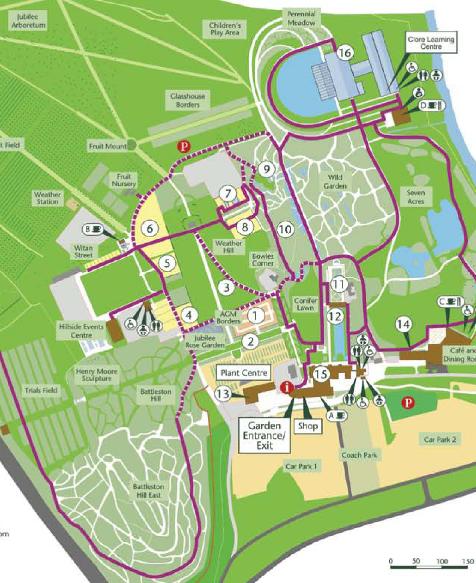
Some of the Roses in the other borders of the Royal Horticultural Society Garden at Wisley are in the Bowes-Lyon Rose Garden (identified as 3 in the map below) or the Jubilee Rose Garden - which is below and to the left of the Bowes-Lyon Rose Garden:-
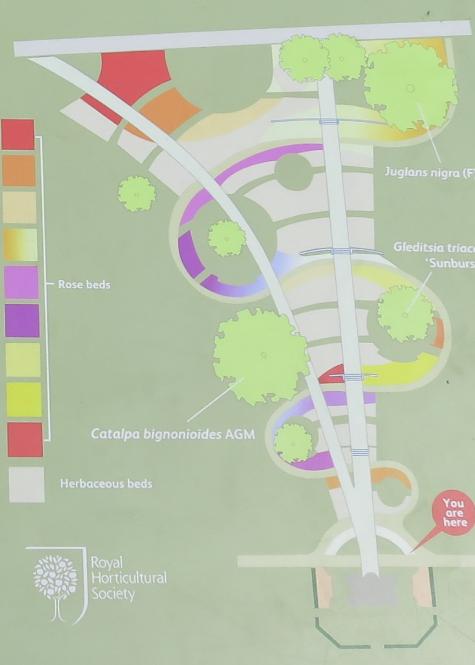
and this detailed map of the Bowes-Lyon Rose Garden from the RHS sign in the garden, which shows it upside down from the above map:-
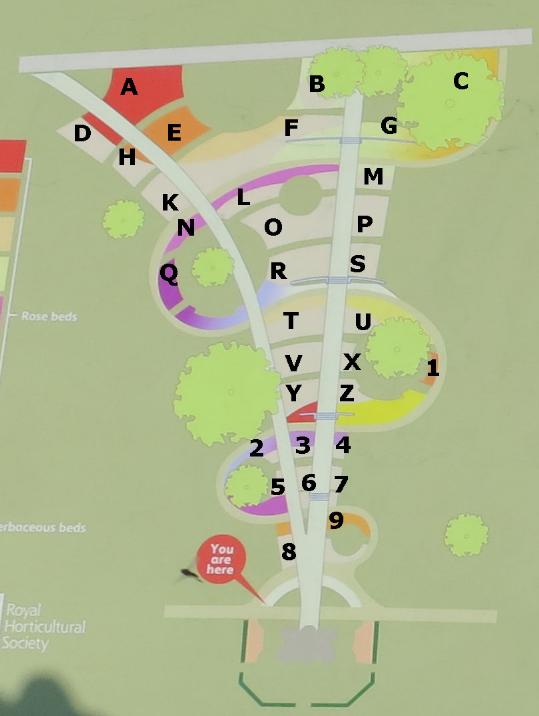
Above map with A-Z or 1-9 identifying each flowerbed location in the Bowes-Lyon Rose Garden:-
|
||||||||||||||||||||||||
Click for further details on WISLEY WISLEY Rose Plant Classification System:- Rosa Wisley 2008 'AUSbreeze' is:-
Normal Rose Plant Classification System:- Now you should not confuse the above system with the usual retail name of Rosa 'Wisley 2008' (Ausbreeze) by Austin Roses where
|
G. |
N. |
U.
Roses in this Gallery Rose Name Link followed by Rose Colour Link on next line, which links to the wrong gallery. The ones below link to the valid gallery:- Other followed by Rose Use:- Bed for Bedding If there is no colour following the plant name, this indicates that this name is either .......................
Rose INDEX Page includes bloom colour thumbnail, rose use, height and width with link to its Rose Description Page. |
|||||||||||||||||||||
Link Index to A. |
H. |
O. |
V.
Roses in this Gallery Rose Name Link followed by Rose Colour Link on next line, which links to the wrong gallery. The ones below link to the valid gallery:- Other followed by Rose Use:- Bed for Bedding
.......................
Rose INDEX Page includes bloom colour thumbnail, rose use, height and width with link to its Rose Description Page. |
|||||||||||||||||||||
B. |
I. |
P. |
W.
Roses in this Gallery Rose Name Link followed by Rose Colour Link on next line, which links to the wrong gallery. The ones below link to the valid gallery:- Other followed by Rose Use:- Bed for Bedding
.......................
Rose INDEX Page includes bloom colour thumbnail, rose use, height and width with link to its Rose Description Page. |
|||||||||||||||||||||
C. |
J. |
The Royal National Rose Society is "is not only the world’s oldest specialist plant society but the foremost global authority on the cultivation and care of the rose. Established in 1876, the RNRS now has a membership that spans the globe and includes many affiliated horticultural societies and research libraries, as well as thousands of rose- loving individuals. Today, the RNRS is best known for its flagship Gardens of the Rose at Chiswell Green in Hertfordshire, on the outskirts of St Albans. Opened 50 years ago by the then Patron of the Society, the Princess Royal, The Gardens of the Rose offer five acres of stunning displays of tens of thousands of roses, both traditional and contemporary, complemented by a huge selection of companion plants. A major objective is the administration of the RNRS International rose trials which are open to both professional and amateur rose breeders. Visit our International Rose Trials page for some background to the trialling process. The Society is also recognised as a governing body in the administration of showing and judging roses in the UK. Visit our shows area page for details of forthcoming events." |
Roses in this Gallery Rose Name Link followed by Rose Colour Link on next line, which links to the wrong gallery. The ones below link to the valid gallery:- Other followed by Rose Use:- Bed for Bedding
.......................
Rose INDEX Page includes bloom colour thumbnail, rose use, height and width with link to its Rose Description Page. |
|||||||||||||||||||||
D. |
K.
"Find That Rose, the guide for rose lovers in the UK is now in its 31st year (2014). This website is based on the variety and Growers details, and also gives you planting and care advice. There are roses for every situation. Breeders over the last decade or so have increased the choice with Patio/Courtyard climbers...suitable for the smaller gardens where taller and wider climbers are just too big. The Book Find That Rose is designed to: Help you find the rose of your choice To help you contact specialist Rose Growers and suppliers Discover who supplies roses mail order Advise you which rose growers export Help retailers and local authorities find a wholesale grower Details of the 31st Edition of Find That Rose….. the book:
Listing approx. 3,550 varieties available in the UK Approximately 200 new varieties listed in the 31st Edition.
46 growers/suppliers featured.
New for the 31st Edition - Dates of Variety Introductions.
Help in tracing a variety with a particular Christian name, or one for a special event.
Details on where you can see roses in bloom this summer.
All this and a Rose Discount voucher towards purchases of roses from select members.
To get the full pictures… i.e. the Book Find That Rose see request a Brochure" |
R. |
Y.
Roses in this Gallery Rose Name Link followed by Rose Colour Link on next line, which links to the wrong gallery. The ones below link to the valid gallery:- Other followed by Rose Use:- Bed for Bedding
.......................
Rose INDEX Page includes bloom colour thumbnail, rose use, height and width with link to its Rose Description Page. |
|||||||||||||||||||||
E. |
L. |
S. |
Z.
Roses in this Gallery Rose Name Link followed by Rose Colour Link on next line, which links to the wrong gallery. The ones below link to the valid gallery:- Other followed by Rose Use:- Bed for Bedding
.......................
Rose INDEX Page includes bloom colour thumbnail, rose use, height and width with link to its Rose Description Page. |
|||||||||||||||||||||
F. |
M. |
T. |
Roses in this Gallery Rose Name Link followed by Rose Colour Link on next line, which links to the wrong gallery. The ones below link to the valid gallery:- Other followed by Rose Use:- Bed for Bedding
.......................
Rose INDEX Page includes bloom colour thumbnail, rose use, height and width with link to its Rose Description Page. |
|||||||||||||||||||||
Site design and content copyright ©November 2009. Page structure amended in September 2012. Mail-order Nursery links updated in May 2014. Flower Colour and Rose Use added to Non-RHS Bowes-Lyon Rose Garden Rose Index above in May 2014. Chris Garnons-Williams. DISCLAIMER: Links to external sites are provided as a courtesy to visitors. Ivydene Horticultural Services is not responsible for the content and/or quality of external web sites linked from this site. |
"Pruning roses - the sissinghurst method Pruning roses the Sissinghurst way helps create those wonderful fountains of roses you see in summer gardens - delicious-smelling, out-of-control geysers of flowers that effuse all over the garden. Pruning roses like this means you don't get those boring little twiggy bushes, all leg and no body, surrounded by bare ground. The Sissinghurst rose pruning technique originated at Cliveden with the Astors' head gardener Jack Vass, who moved to Sissinghurst in 1939. Vita Sackville-West loved her roses, particularly the dark, rich Gallicas such as 'Charles de Mills', 'Tuscany Superb' and 'Cardinal de Richelieu', but it was Jack Vass who started to grow them in this exceptional way, and roses have been pruned and trained like this at Sissinghurst ever since. Other National Trust properties send their gardeners here to learn this ingenious technique. The rose pruning philosophy can be summed up as "treat them mean, keep them keen". If you put every stem of a rose plant under pressure, bending and stressing it, the rose will flower more prolifically. The plant's biochemistry tells the bush it's on the way out and so needs to make as many flowers as possible. THE SISSINGHURST ROSE PRUNING TECHNIQUE Climbers and ramblers The rose pruning season at Sissinghurst starts in November with the climbers and ramblers that cover almost every one of the terracotta brick walls. First, the gardeners cut off most of that year's growth. This keeps the framework of the rose clear and prevents the plant from becoming too woody. Next, large woody stems are taken out - almost to the base - to encourage new shoots. These will flower the following year. The remaining branches are re-attached to the wall, stem by stem, starting from the middle of the plant, working outwards, with the pruned tip of each branch bent down and attached to the one below. Climbers such as 'Paul's Lemon Pillar' are a bit more reluctant than ramblers like 'Albertine' and the famous Rosa mulliganii on the frame in the centre of the White Garden, which are very bendy and easy to train. Shrub roses Once the wall roses are done, it's the turn of the border shrubs. They should be pruned before they come into leaf to prevent leaf buds and shoots from being damaged as their stems are manipulated. Depending on their habit, shrub roses are trained in one of three ways. The tall, rangy bushes with stiffer branches (such as 'Charles de Mills', 'Ispahan', 'Gloire de France', 'Cardinal de Richelieu' and 'Camayeux') are twirled up a frame of four chestnut or hazel poles. Every pruned tip is bent and attached to a length below. The big leggy shrubs, which put out great, pliable, triffid arms that are easy to tie down and train, are bent on to hazel hoops arranged around the skirts of the plant. Roses with this lax habit include 'Constance Spry', 'Fantin-Latour', 'Zéphirine Drouhin', 'Madame Isaac Pereire', 'Coupe d'Hébé', 'Henri Martin' and 'Souvenir du Dr Jamain'. All the old and diseased wood is removed and then, stem by stem, last year's wood is bent over and tied onto the hazel hoop. You start at the outside of the plant and tie that in first and then move towards the middle, using the plant's own branches to build up the web and - in the case of 'Constance Spry' and 'Henri Martin' - create a fantastic height, one layer domed and attached to the one below. Without any sign of a flower, this looks magnificent as soon as it's complete, and in a couple of months, each stem, curved almost to ground level, will flower abundantly. That leaves just the contained, well behaved, less prolific varieties ('Petite de Hollande', 'Madame Knorr', 'Chapeau de Napoléon', ( syn. Rosa x centifolia 'Cristata') and those that produce branches too stiff to bend ('Felicia' and the newish David Austin rose, 'William Shakespeare 2000'). These are pruned hard, then each bush is attached to a single stake, cut to about the height of the pruned bush and attached by twine. Without the stake, even these will topple under the weight of their summer growth. For those who live in the North, where some roses are yet to leaf, you could get bending now. If your roses are already too advanced for this year, come and see how it's all done at Sissinghurst." from Sarah Raven. |
|||||||||||||||||||||||
"The 5 P’s For Easy Rose Growing 1. Planning 2. Preparation 3. Planting 4. Pruning 5. Preservation Planning Try to plan well in advance of purchasing your roses. Roses come in a multitude of sizes, habits and colours. They prefer a sunny position and a neutral or slightly acidic well drained soil. Certain roses will tolerate differing degrees of shade and some will thrive in poor soils. Do your homework. Preparation The area to be planted should be free of weeds and deeply dug with the addition of plenty of organic matter such as well rotted farmyard manure or garden compost plus bonemeal. Soil that has previously grown roses should be removed to a depth of 45cms and replaced with fresh soil from elsewhere. This should be completed well before planting to allow the soil to settle. Planting Bare root roses can be planted from November until March provided the soil is workable. Dig a hole large enough to accommodate the roots. Mix a handful of bonemeal with the excavated soil. Spread the roots out in the hole and gradually replace the soil firming well so the union (where the shoots meet the roots) is 2-3 cms. below the soil, water well. If conditions are very wet or frosty when your roses arrive they can be kept unopened in their packaging for a week or more and planted as soon as things improve. Pruning This is a way to maintain a healthy, productive and well balanced plant. Different types of roses require different strategies so see the group headings on the website for more detailed pruning guides. Always use sharp secateurs or loppers and try to prune just above an outward facing bud (where the leaf stalk meets the stem) with a cut sloping down away from the bud. Remove any dead, damaged or diseased wood before pruning. Preservation Roses can be long lived plants provided they are properly maintained. They require plenty of moisture and nutrients to stay healthy and flourish. In dry spells water well, especially in the first few years after planting. The application of a deep mulch in the spring will help to retain water. Feed twice a year on heavy soils (March and June) and more regularly on lighter soils with a good rose fertilizer or fish blood and bone. Pests and diseases are best controlled with good husbandry. There are some good organic products on the market now that can be used to help maintain your plants health. Any suckers (shoots growing from the rootstock) should be pulled off (not cut) as soon as possible." from Trevor White Old Fashioned Roses. |
||||||||||||||||||||||||
|
||||||||||||||||||||||||




This table copied from ROSE USE GALLERY PAGES ROSE PLANT 2 GALLERY PAGES MODERN CLIMBER ROSE TYPE SHAPE For further details on the cultivation of roses, consult the The Rose Society UK. The Royal National Rose Society went into administration on 15th May 2017. --------- ROSE PLANT 2 GALLERY PAGES OLD GARDEN CLIMBER ROSE TYPE SHAPE BED PICTURES
|
Camera Photo Galleries showing all 4000 x 3000 pixels of each photo on your screen that you can then click and drag it to your desktop; Recommended Rose Pruning Methods 13 Nursery of Nursery of
|
||||||||||||||||||||||||||||||||||||||||||||||||||||||||||||||||||||||||||||||||||||||||||||||||||||
|
|||||||||||||||||||||||||||||||||||||||||||||||||||||||||||||||||||||||||||||||||||||||||||||||||||||


Flower Colour |
|||||||||
Rose Use Rose Index |
|||||||||
Page for rose use as ARCH ROSE, PERGOLA ROSE, COASTAL CONDITIONS ROSE, WALL ROSE, STANDARD ROSE, COVERING BANKS or THORNLESS ROSES. FRAGRANT ROSES Page 1 and Page 2 - The roses inserted into this page are described as Moderately Fragrant or Very Fragrant in the relevant Rose Plant Description Page. NOT FRAGRANT ROSES - The roses inserted into this page are described as Slightly Fragrant or nothing mentioned about fragrance in the relevant Rose Plant Description Page. |
|||||||||
Rose Bloom Shape |
Click on thumbnail to change to Plant Description Page of the Rose Plant named in the text below that photo . |
||||||||
Rose |
|
|
|
|
|
||||
Rose Plant Height from Text Border |
Blue = 0-24 inches (0-60 cms) |
Green=24-72 inches (60-180 cms) |
Red = 72+ inches (180+ cms) |
||||||
Rose Plant Soil Moisture from Text Background |
Wet Soil |
Moist Soil |
Dry Soil |
||||||